
Most people carry a fairly complete picture of a beaver before they ever see one: a pond, a dam across the outlet, a lodge rising from the water, and a nearby stump sharpened by oversized incisors. Those pieces belong together often enough to become the animal's standard portrait, but they are not a fixed package. A beaver living where the water is already deep and persistent can meet many of the same needs without building a dam or a freestanding lodge.
Water provides security, travel, access to food, and shelter. On a shallow stream, impounding it can deepen the channel, extend safe swimming access into low ground, and keep a den or lodge entrance underwater. On a larger river, much of that work has already been done. The Fox River can support a beaver that excavates into the bank, feeds along the shoreline, cuts woody vegetation, and moves through a long reach of water without ever producing the structure most people expect to find.
The Beaver in the Bank
Where the bank is high enough and the soil can be excavated, a beaver can tunnel in from below the surface and rise to a dry chamber above normal water level. The arrangement provides the same basic protection as a lodge while leaving almost nothing visible from across the river. Large rivers and lakes make bank dens especially practical because adequate water depth already exists at the entrance.
Research on American beavers in larger rivers has documented bank-dwelling animals that forage along the riparian corridor, cut substantial amounts of woody vegetation, and alter the channel edge without damming the main river. Dam construction is associated much more strongly with smaller, lower-gradient streams, where a structure only a few feet high can materially change water depth. A broad channel carrying more water is harder to dam, more vulnerable to high-flow failure, and often gives the animal less reason to try.
That makes the shoreline a better place to look for Fox River beavers than an imaginary pond behind a stick dam. An underwater opening beneath roots can lead into a den. A worn patch of mud may be a regular entry point. Freshly cut willow or cottonwood may mark a feeding area. Islands, backwaters, tributary mouths, and vegetated margins add quieter water and food without requiring the animal to alter the main channel. The Fox runs through parks, neighborhoods, downtowns, golf courses, riprap, and restored natural areas, yet many stretches still contain enough earthen bank and riparian vegetation for this kind of life.
Why Build a Dam?
A dam becomes useful when the existing water is too shallow, too narrow, or too exposed for the way a beaver uses its territory. On land, a beaver is a heavy, short-legged rodent moving between food and the security of water. Once submerged, it can travel efficiently, approach shelter from below, transport branches, and disappear quickly. Raising the water level enlarges that safer part of the landscape.
The effect extends beyond depth. As water backs up, low ground floods, side channels fill, and vegetation that once stood beyond easy swimming distance may become part of the shoreline. A tree that required a trip across dry ground can end up at the edge of the pond. The dam has changed where the beaver can move as much as where the water sits.
This is why relatively small streams are so easily transformed. A modest structure can spread water across a broad, low floodplain, while the same effort on the Fox mainstem might accomplish little before higher flow tears it apart. Beavers living in large-river systems can still dam tributaries, backwaters, and secondary channels. The important difference is whether changing the water solves a problem the existing river has not already solved.
When Norton Creek Became a Marsh
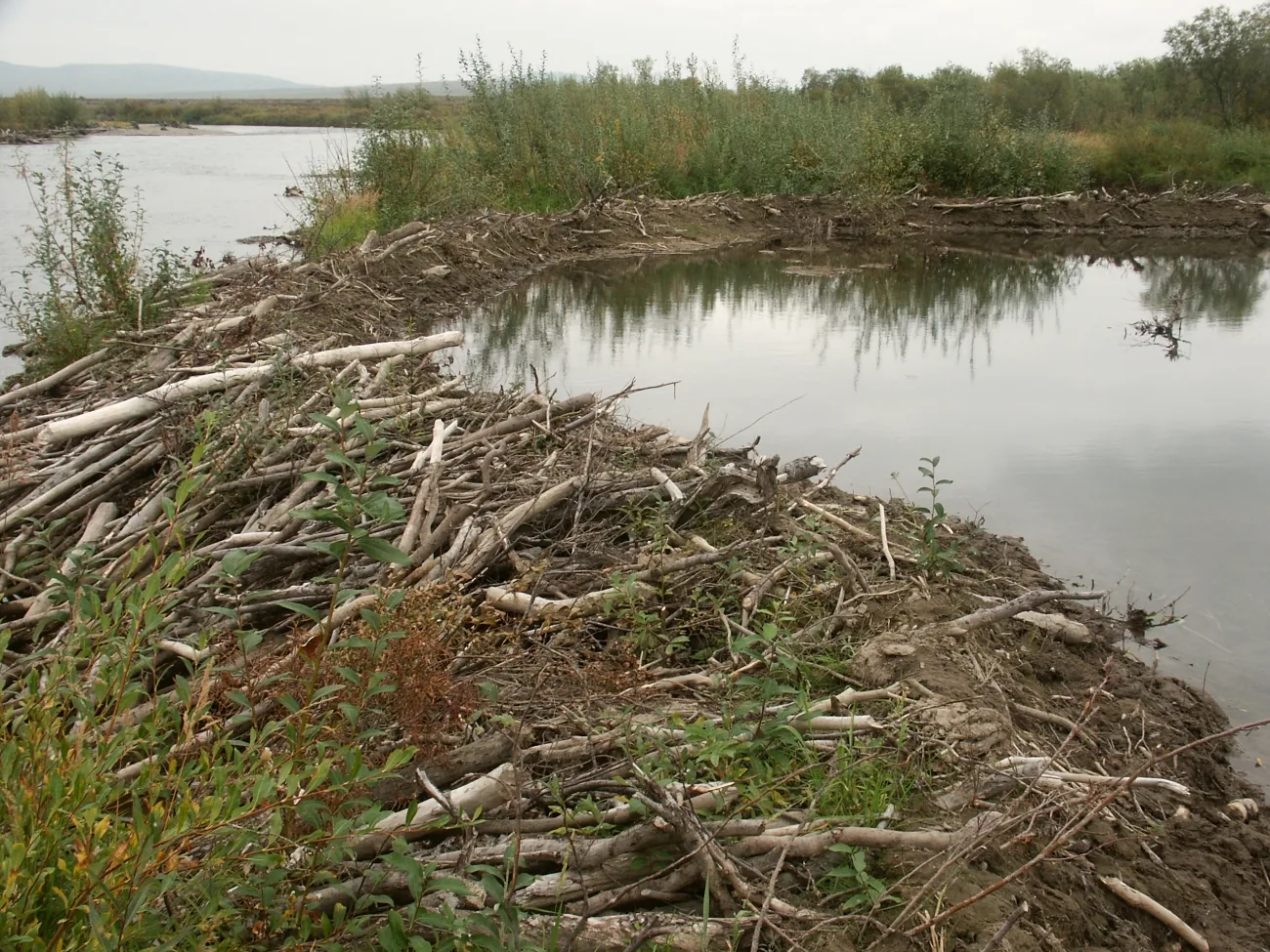
I watched that difference play out on Norton Creek at Dunham Forest Preserve. The beavers built several dams, and the largest stretched roughly fifty yards across the flooded corridor, with the main section standing about three feet high by my estimate. Water spread far beyond the original creek channel and turned a narrow strip of running water into a broad marshy complex.
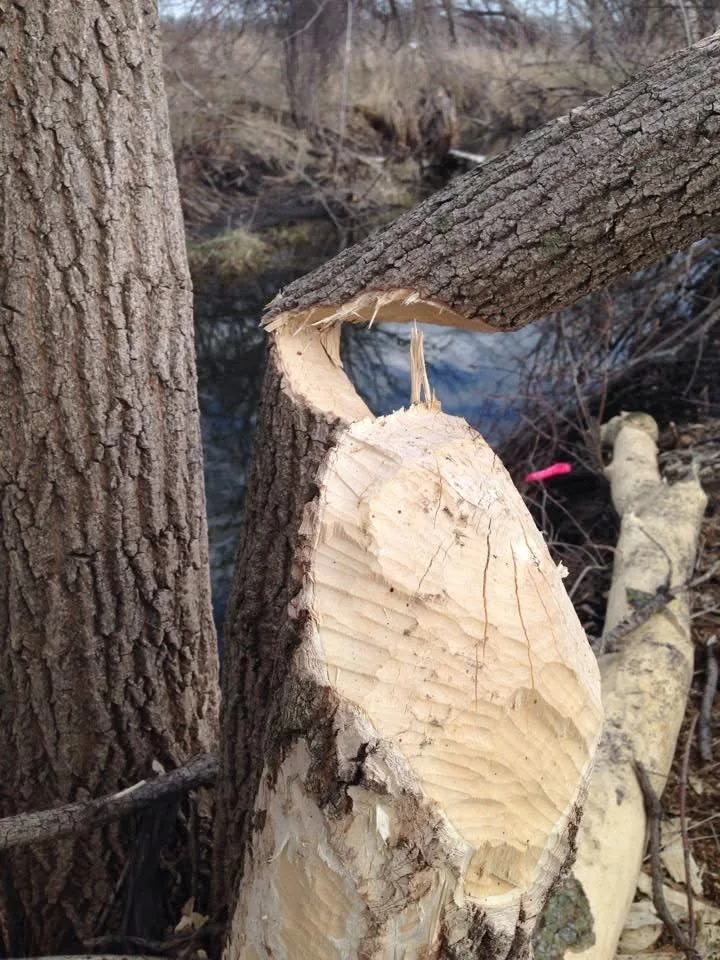
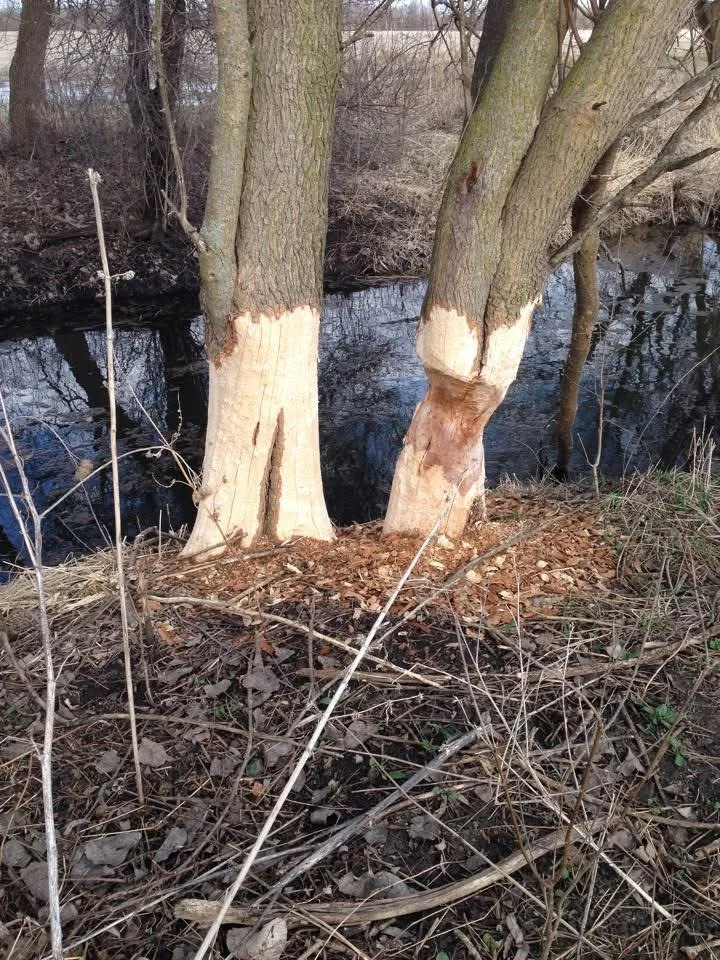
The construction came with an obvious cost. Several mature trees along the creek were heavily damaged, and some were effectively lost. Fresh cuts exposed pale wood around trunks thick enough to make the amount of chewing difficult to miss. Some of that wood may have gone into the dams, some may have been used for food, and some was simply left where it fell.
The new water was quickly occupied. I caught young bass in the flooded area, watched carp moving through the system, and saw muskrat families using the marsh. Grass, brush, and shallow margins that had been dry or only intermittently wet became a mixture of open pools, drowned vegetation, muddy edges, and submerged cover. Whatever else the dams changed, they had created habitat that fish and mammals were already using.
Municipal records from Wayne later show the other side of the episode. A dam near Honey Hill was removed in late 2023, rebuilt within weeks, and officials began looking for a trapper. I later learned that at least one beaver was trapped and killed. The public records call the beaver an issue but do not document a major residential flooding problem or quantify substantial nearby property damage. Biologically, the rebuilding is easy to understand: once the impoundment had become part of the colony's territory, losing the dam meant losing the water conditions the animals had created.
What a Dam Changes
A beaver dam changes the movement of water first, and nearly everything else follows from that. Flow slows and deepens upstream, water spreads laterally into low ground, and sediment and organic material that would have continued downstream can settle behind the structure. Over time, a narrow channel may acquire pools, shallow marsh, saturated soils, and newly flooded margins. Some plants expand into those conditions while others, including mature trees, may die from prolonged inundation or be cut by the beavers themselves.
The biological response is just as dependent on setting. Newly flooded shallows can provide cover and feeding water for young fish, while deeper pools may add refuge during low water or winter. Amphibians and waterfowl often gain wetland habitat, muskrats can use the vegetation and structures, and mink or river otters may exploit the prey and cover around the impoundment. At the same time, a dam can alter temperature, dissolved oxygen, current, and fish passage. A species that benefits from ponded water may be favored at the expense of one that requires a faster, cleaner reach of stream.
Those tradeoffs become especially sharp where people have fixed expectations for where water should go. A beaver pond can flood a trail, field, driveway, culvert, or building, and those conflicts can require active management. The ecological effects can also cut both ways without any infrastructure involved. Sediment retention may build wetland soil while covering coarse streambed habitat. Flooded trees become standing dead wood and eventually open marsh. In Norton Creek, the same dams that damaged mature trees and inundated some ground also produced the shallow wetland where I watched fish and mammals moving through new habitat. The landscape had changed enough that both descriptions were true.
Reading Beaver Sign
Fresh wood is the easiest sign to recognize. Beaver incisors leave broad, paired grooves, and smaller stems often end in the familiar tapered point. New cuts are pale before weather darkens them. Nearby branches may be stripped of bark, dragged into the water, or left along a feeding site. Repeated travel between bank and water can wear smooth muddy slides, and tracks sometimes remain where soft mud holds them.
The den itself may offer only indirect clues because the entrance is normally underwater. A worn approach beneath exposed roots, a regularly disturbed patch of bank, or repeated sightings of an animal disappearing at the same place are more useful than searching for an obvious hole above the waterline. Territorial scent mounds can be even less conspicuous: small piles of mud, vegetation, and debris marked with castoreum along the shore.
Where lodges or dams are present, fresh material helps distinguish an active structure from an old accumulation of sticks. Recently cut branches, packed mud, and water held noticeably above the downstream level all point toward maintenance. None of those structures is required for a beaver to be present, however. On the Fox, the absence of a dam may simply mean the river already supplies the depth the animal needs.
Beaver, Muskrat, Mink, or Otter?
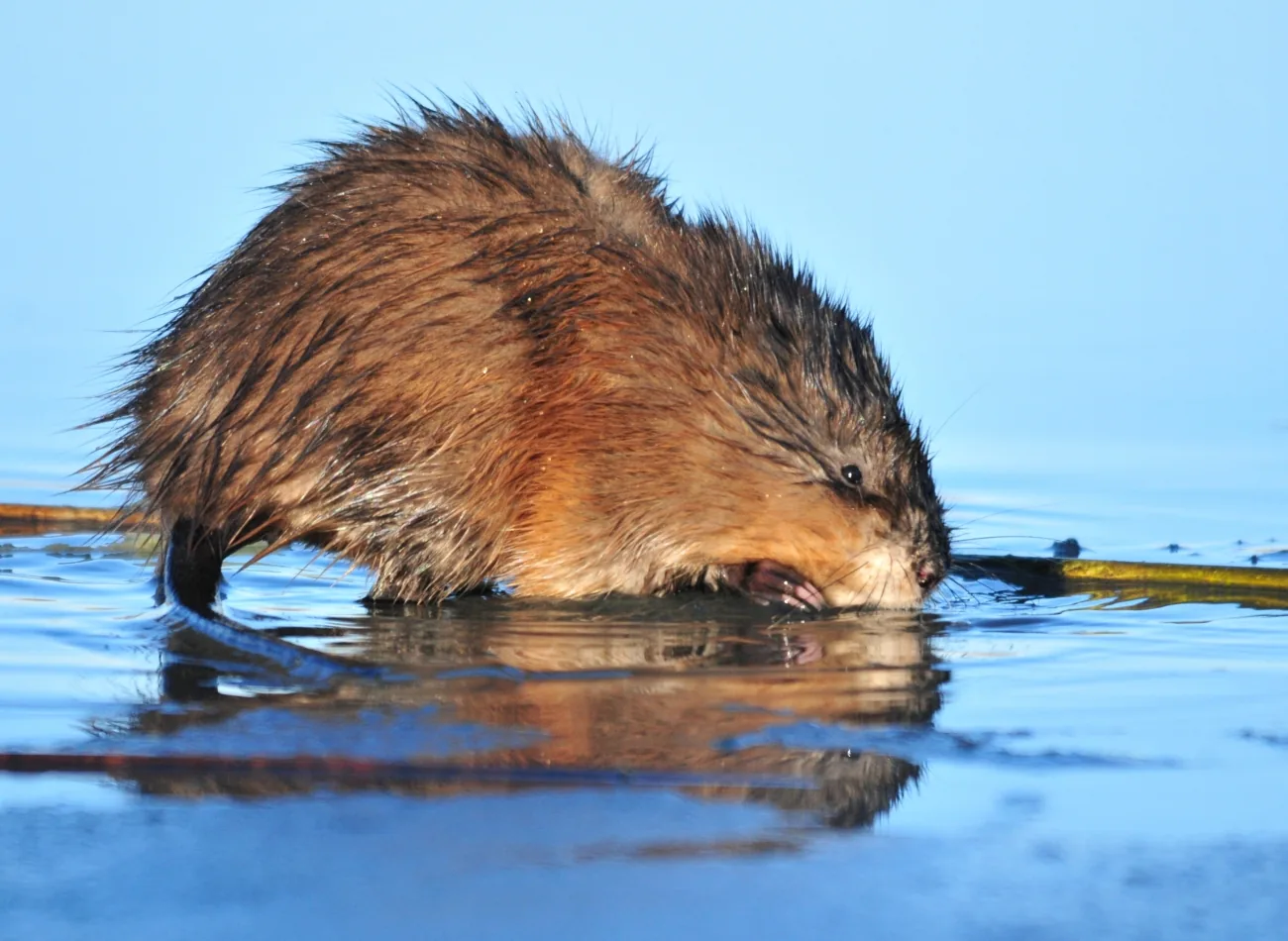
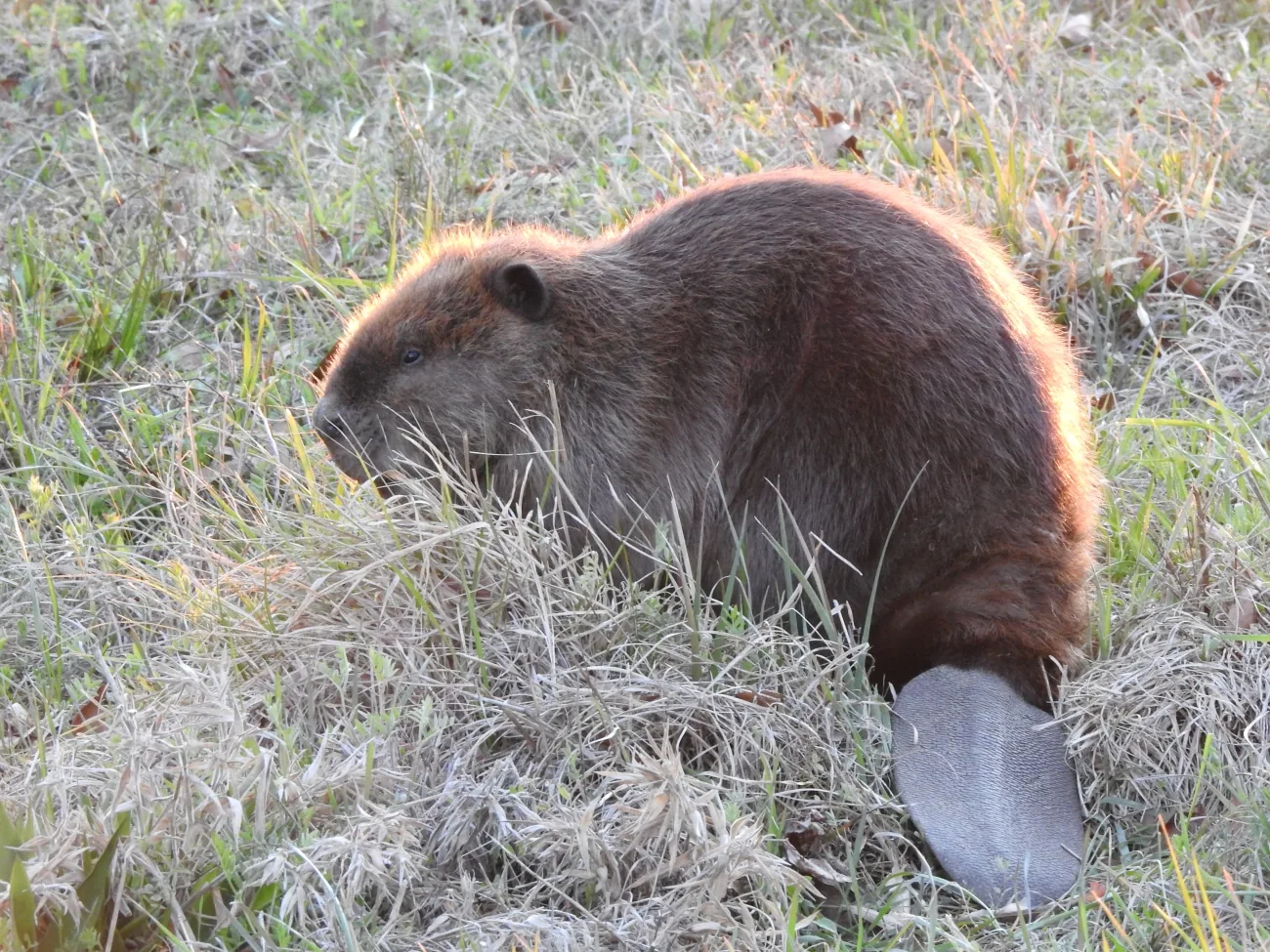
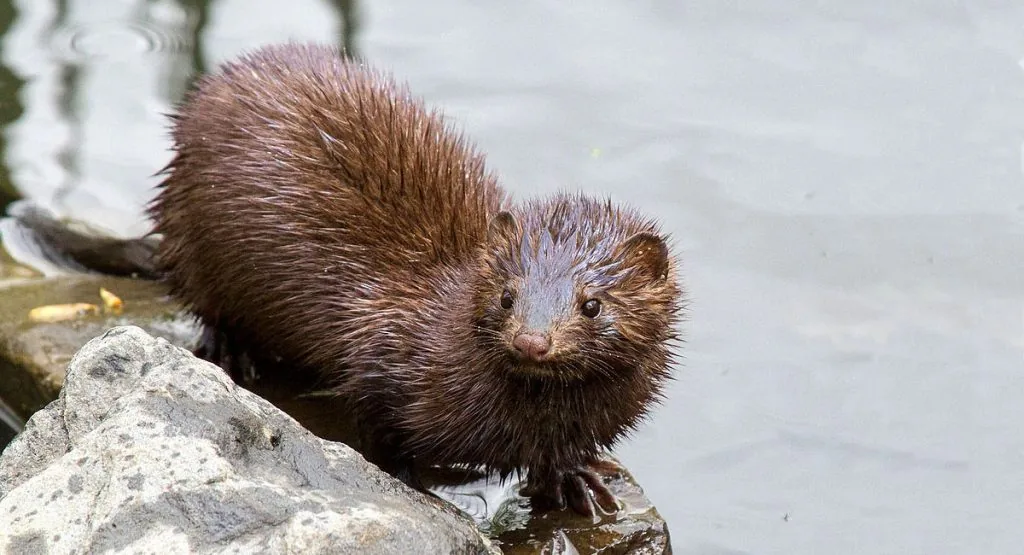
A clear view of an adult beaver usually settles the identification, but surface sightings are often less cooperative. The head can appear surprisingly modest compared with the heavy body behind it, and the broad tail commonly remains submerged while the animal swims. It becomes obvious when the beaver turns, climbs out, dives in shallow water, or delivers a warning slap. Juveniles create more confusion because their smaller size overlaps the visual expectations people have for muskrats, especially when distance makes scale difficult to judge.
| Comparison | Muskrat | Beaver | Mink | River otter |
|---|---|---|---|---|
| Image |
|
|
|

|
| Scale | About 18–25 in. total | About 3–3½ ft.; commonly 25–60 lb | Roughly 17–26 in. total | About 34–53 in.; 10–30 lb |
| Surface profile / swimming | Compact and rounded; the head looks large for the body. Often rides close to the surface near shore; part of the back may show depending on speed. | Much bulkier; the head looks relatively small on a heavy body. Smooth, low swim with more mass behind the head. | Long, low, weasel-shaped; often more of the back shows. Quick, direct swimmer that frequently moves in and out of shoreline cover. | Longer, heavier, thick-necked. Often the head and neck dominate at the surface, followed by repeated dives and long underwater runs. |
| Tail | Long, narrow, nearly hairless, and flattened side-to-side. May trail visibly or scull just under the surface. | Broad, flat, leathery paddle; often submerged while swimming, unmistakable when seen. | Fully furred, tapered, and darker toward the tip. | Thick, fully furred, muscular, tapering to the tip. |
| Behavior & context | Usually tight to bank, vegetation, sloughs, or backwaters. May carry plants and disappear into submerged bank entrances. | Chewed woody stems, slides, bank dens, dams, or lodges. Juveniles can confuse size at distance. | Hunts along rocks, roots, and banks; alternates readily between land and water. | More aquatic and wide-ranging; may surface well off bank or appear in pairs or family groups. |
Context can settle a poor view. Freshly chewed woody stems, broad muddy slides, a substantial bank entrance, scent mounds, a lodge, or a maintained dam all strengthen a beaver identification. Muskrats, mink, and river otters can occupy the same general shoreline habitat, so a poor view still has to be judged from several clues. A missing dam should never count against the beaver.
Building What It Needs
The Fox River and Norton Creek show the range of what the same animal can do within one watershed. A beaver in the main channel may spend its life inside the bank and along the first few feet of shoreline. On a narrow tributary, a few feet of dam can push water across low ground until the entire place changes character. Both begin with the water the animal finds there.
Along the Fox, a chewed tree is therefore worth reading in context rather than using it as a pointer toward an unseen dam. Look at the depth against the bank, the nearby backwaters and tributaries, the vegetation, and the routes available through water. A beaver may already have everything it needs. On a smaller creek, the answer can be impossible to miss: water where dry ground used to be, fresh-cut wood in the dam, and a marsh spreading behind it.