
River otters were documented on the Fox in Kane County more than 170 years ago, then faded almost entirely from the watershed. Their return offers a useful way to think about what recovery really looks like in a river that has been altered for generations.
Long before the Fox River became a corridor of subdivisions, parks, dams, wastewater plants, bike paths, fishing access, and restored prairie, river otters were part of it.
A 1904 history of Kane County, looking back on the region’s early wildlife, noted that an otter was taken from time to time and that the animals were still being observed along the Fox into the 1850s. The account is brief and matter-of-fact, which may be part of what makes it useful. There is no attempt to turn the animal into a symbol. Otters were simply part of the river’s fauna, present often enough to be remembered, if never described as especially abundant.
By the middle of the twentieth century, that continuity had been broken. A mammal survey conducted in Kendall County in the late 1960s found no evidence of a resident otter population, even though the Fox was considered the most likely place one might eventually turn up. In the decades that followed, individual sightings drew attention precisely because they were unusual. One was reported near Batavia in 1981. Two more were seen below the Elgin dam in 1986. Illinois biologists later treated those records cautiously, regarding them as likely transient animals rather than evidence of an established population.
For much of the twentieth century, that seems to have been the reality of the Fox. Otters had once used the river, and then, for generations, they were largely absent.
A River Changed
The disappearance did not occur in isolation. River otters were declining across Illinois as the landscape around them changed at a scale that is difficult to overstate. Wetlands were drained, rivers were altered, industrial and municipal waste entered waterways, agricultural land replaced native habitat, and unregulated harvest reduced otter numbers directly. The same transformation was unfolding along the Fox.
By the twentieth century, the river flowing through northeastern Illinois had become a working river in the fullest sense of the phrase. Communities had grown along its banks. Dams altered local habitat and hydraulics. Sewage and industrial discharges affected water quality. Agriculture and urban development changed the way rain moved through the watershed and the sediment, nutrients, and contaminants it carried with it.
There is no clean historical record showing the final point at which otters ceased to persist in Kane County, nor is there a single cause that explains their disappearance. The broader pattern is clear enough. As the Fox became more heavily altered, otters were being pushed toward the margins throughout Illinois.
By 1989, biologists estimated that fewer than 100 river otters remained in the entire state.
That number gives the local history some scale. The loss from the Fox was part of a statewide collapse severe enough that the species came close to disappearing from Illinois altogether.
The Recovery Did Not Start Here
Illinois responded in the 1990s with an ambitious restoration program. Between 1994 and 1997, the state released 346 wild-caught river otters from Louisiana into selected watersheds, helping accelerate a recovery that eventually moved the species from endangered to threatened status and, later, off the threatened list entirely. In 2012, Illinois reopened a regulated trapping season for the first time since 1929.
The Fox River basin was not one of the places where otters were stocked.
That detail matters because it changes the character of the local recovery. The animals seen on the Fox were not simply the descendants of otters placed into this watershed by wildlife managers. Their return appears to have come through expansion and recolonization as populations elsewhere in Illinois and neighboring states recovered and began occupying more connected habitat.
River systems make that kind of movement possible. Otters can travel substantial distances along rivers, tributaries, wetlands, and shorelines, and the boundaries that matter to people, county lines, municipalities, park districts, do little to constrain them. A river that has become usable again can eventually be found.
Where the modern Kane County animals originated is difficult to know. Some may descend from populations strengthened by Illinois’ restoration effort. Others may trace back to surviving northern populations or animals expanding out of Wisconsin. By the mid-1990s, otter reports in the Fox system were already increasing even though the watershed itself had received no stocked animals.
The important part of that history is the direction of travel. As the species recovered, the Fox once again became part of its range.
Signs Along the River
For years, modern Fox River records remained scattered enough that they could plausibly be explained as occasional wanderers. An otter near Batavia or two animals below the Elgin dam might have represented little more than movement through the system.
The evidence became more persuasive over time.
In 2017, wildlife biologists working along the Fox in Lake County found an otter latrine, one of the shoreline sites river otters repeatedly use for scent marking and communication. A trail camera later recorded an otter returning to the area. That kind of evidence carries more weight than a fleeting sighting because it shows repeated use of habitat rather than a single animal passing through.
Two years later, the story reached Kane County in a way that was hard to ignore. Photographic evidence documented three otters in the Fox River system over a period of several weeks, including two animals in Ferson Creek with a fish.
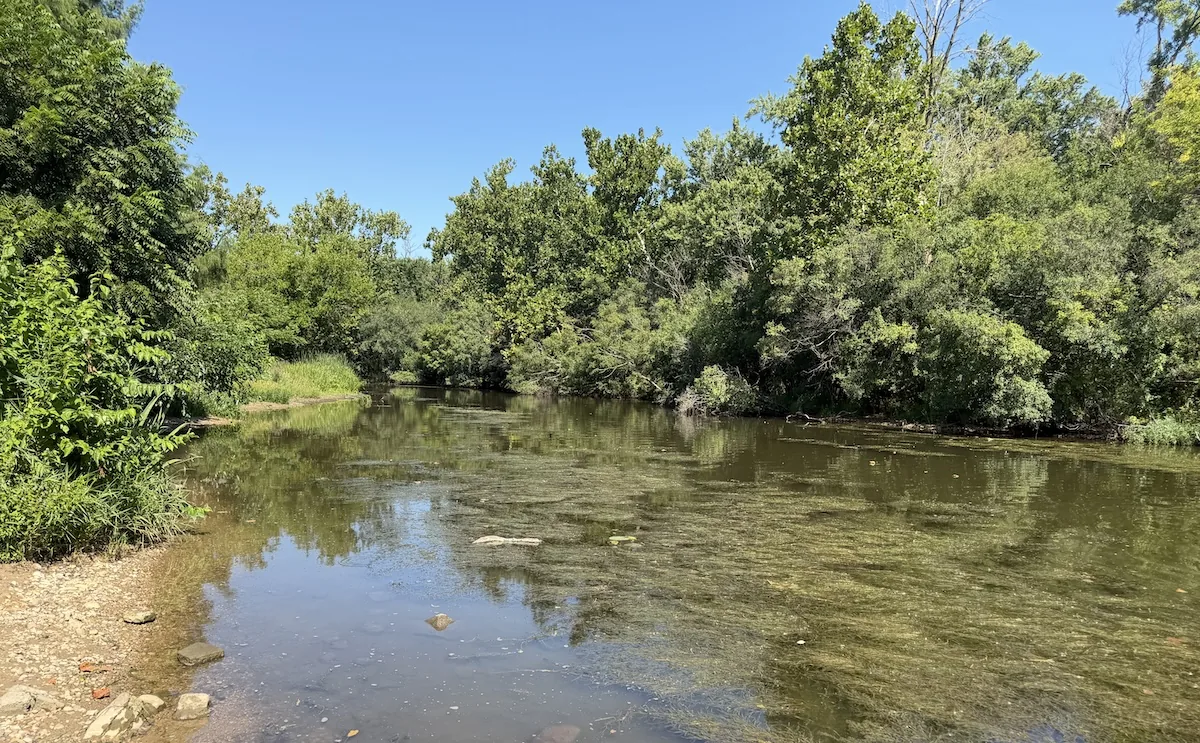
For anyone who knows the St. Charles stretch of the river, Ferson Creek makes the larger recovery story tangible. It is a familiar tributary in a heavily used suburban landscape, bordered by parks, roads, neighborhoods, and all of the ordinary infrastructure that now defines much of the lower Fox. Seeing otters there compresses more than a century of environmental history into one small piece of water.
Observations have continued around St. Charles, including reports near Tekakwitha Woods and through the downtown corridor. In 2025, Kane County Forest Preserve staff captured video of a wild river otter in local habitat, footage the district believed to be its first of the species in Kane County.
The public record is still too thin to say much about the size or permanence of the local population. I have found no Kane County study documenting denning sites, reproduction, or a reliable population estimate. What the available evidence does show is repeated use of the Fox River system by otters over a period of years, across multiple locations, after decades in which such records were exceedingly rare.
That alone marks a significant change.
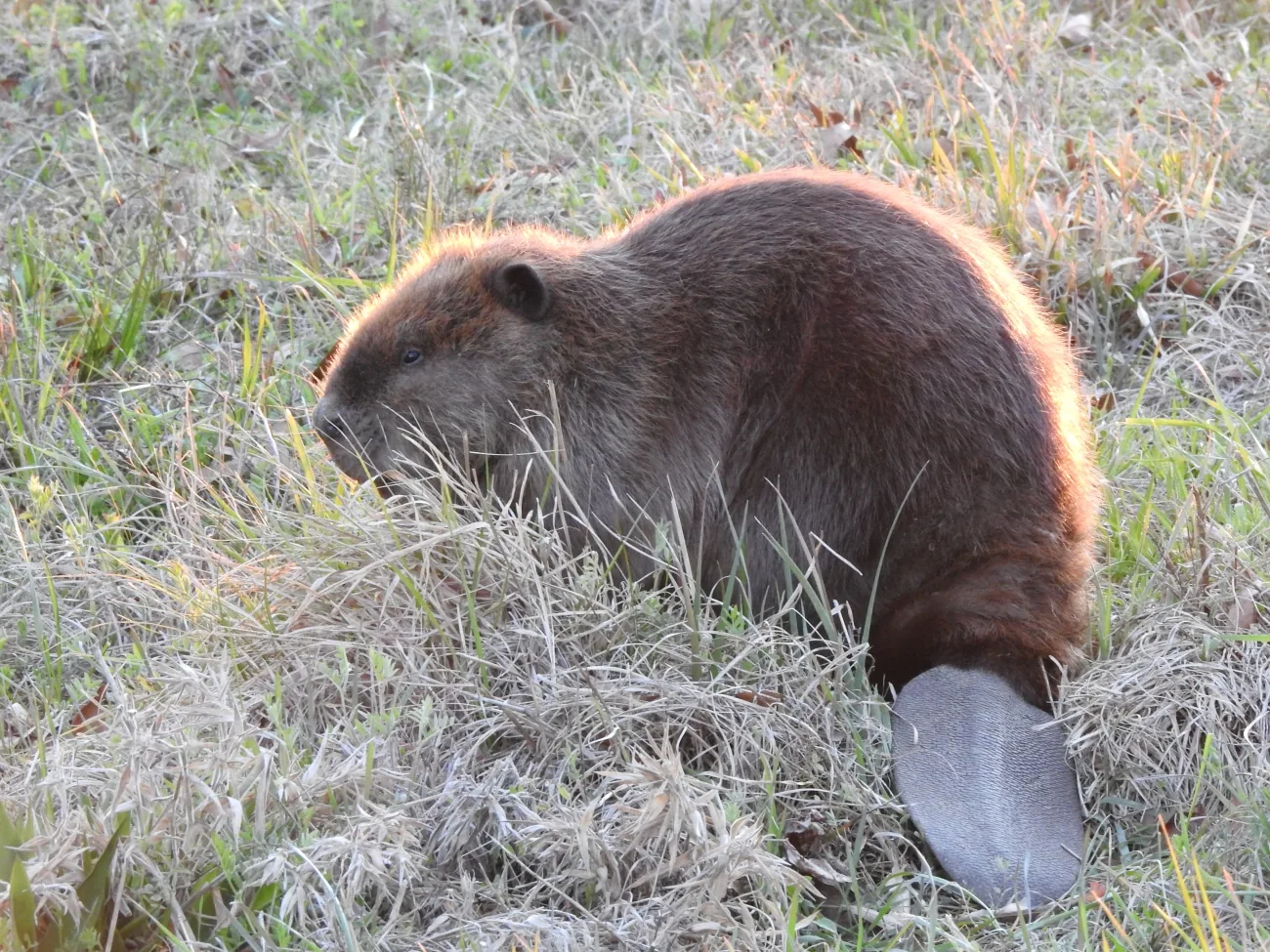
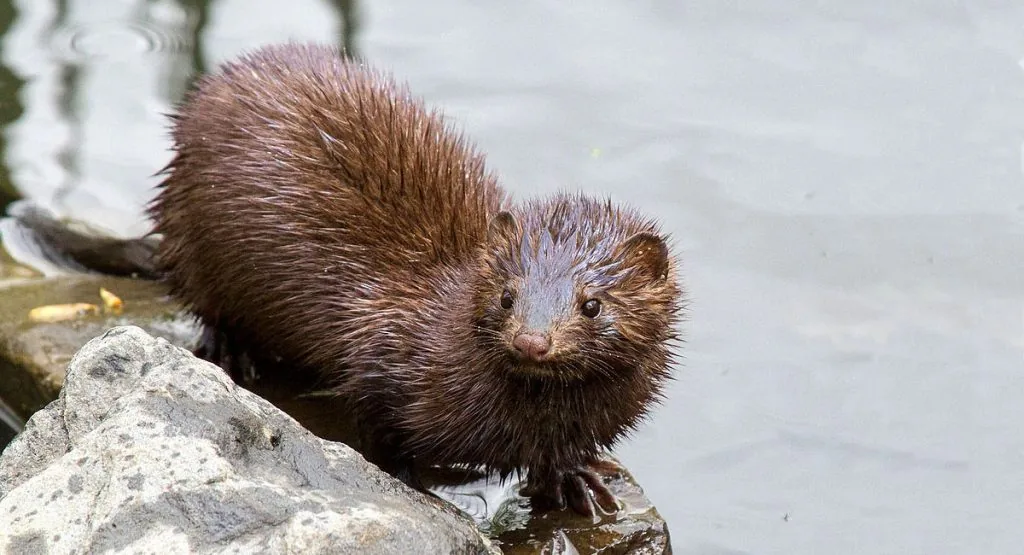
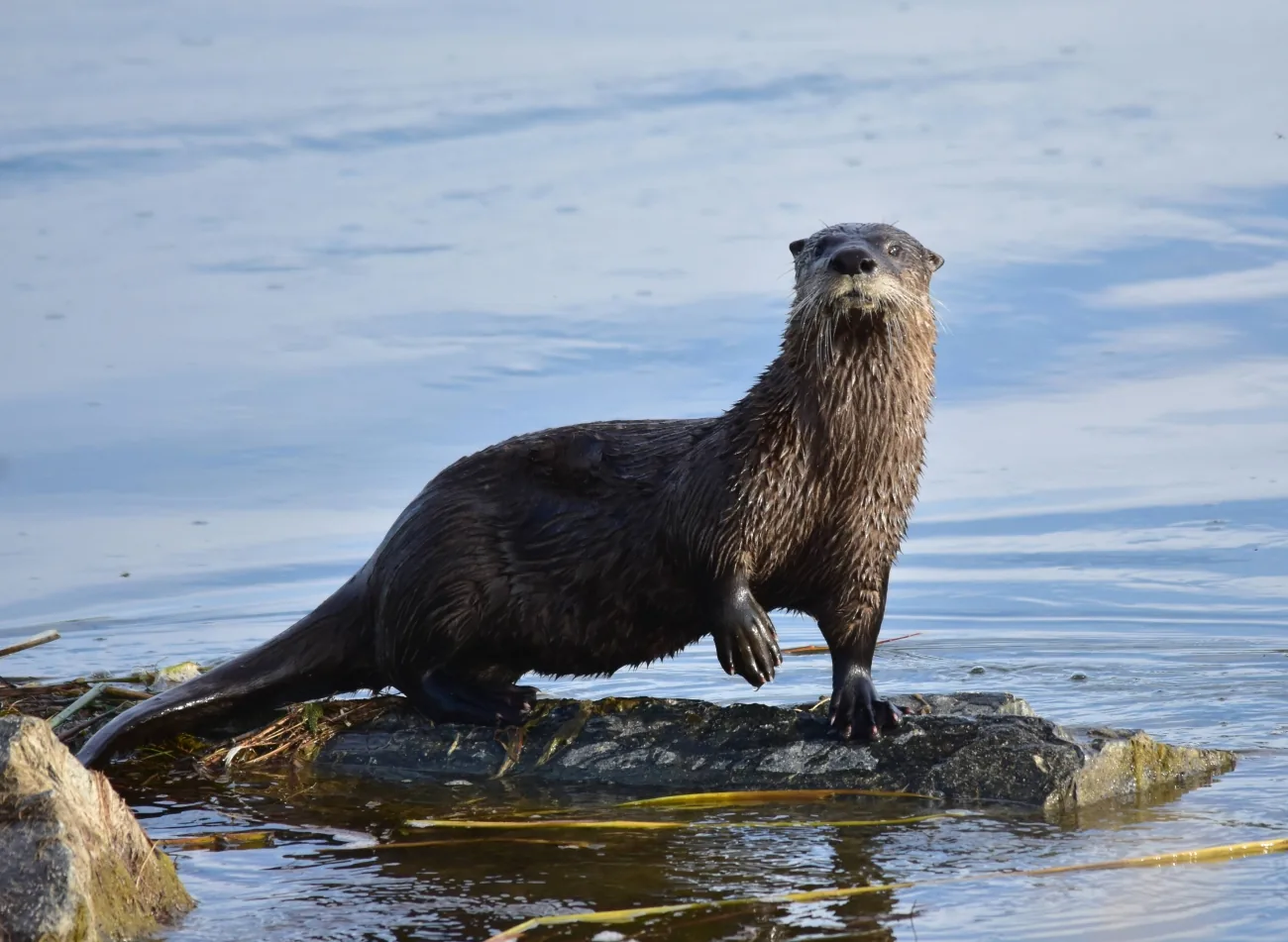
Muskrat, Beaver, Mink, or Otter?
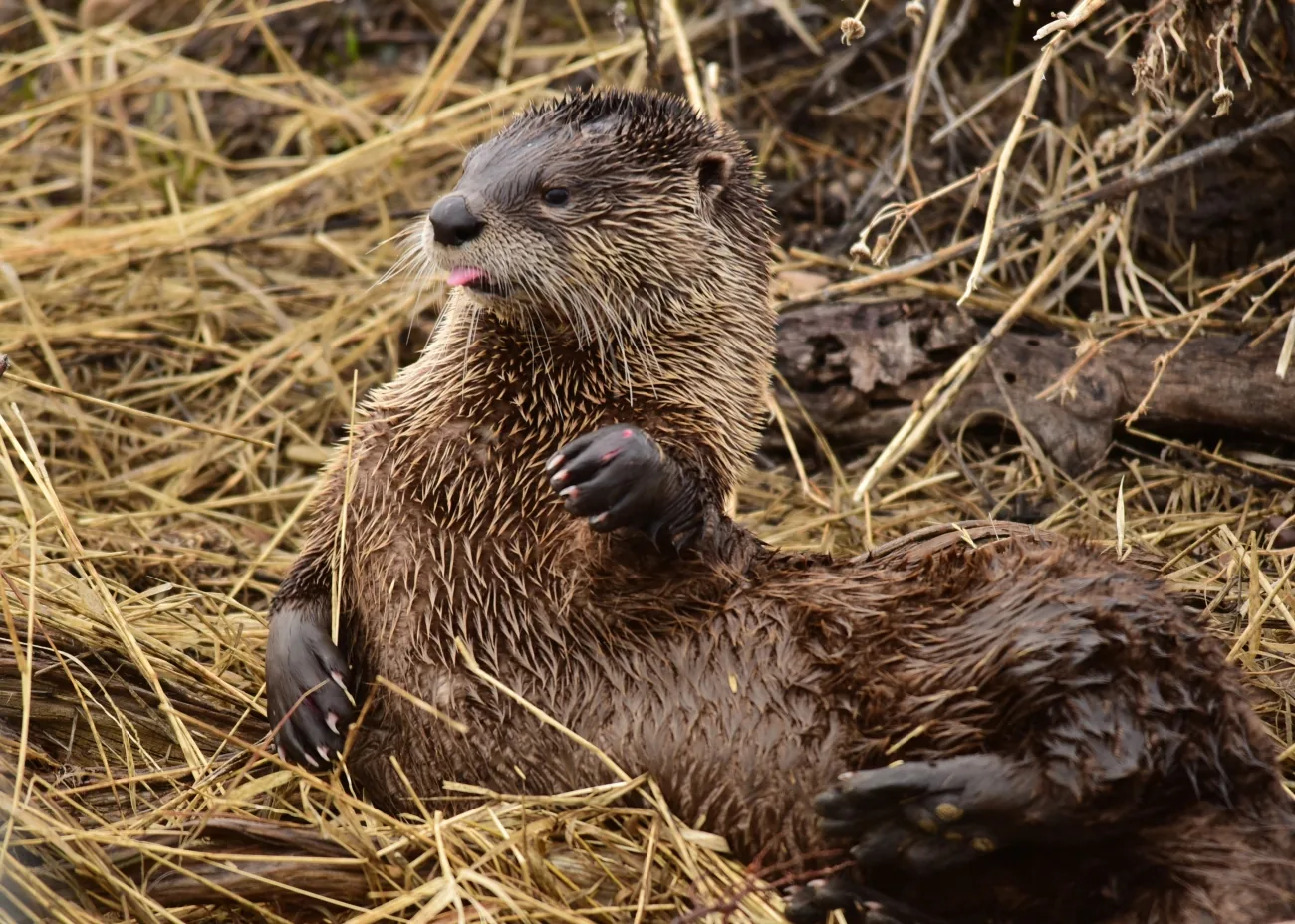
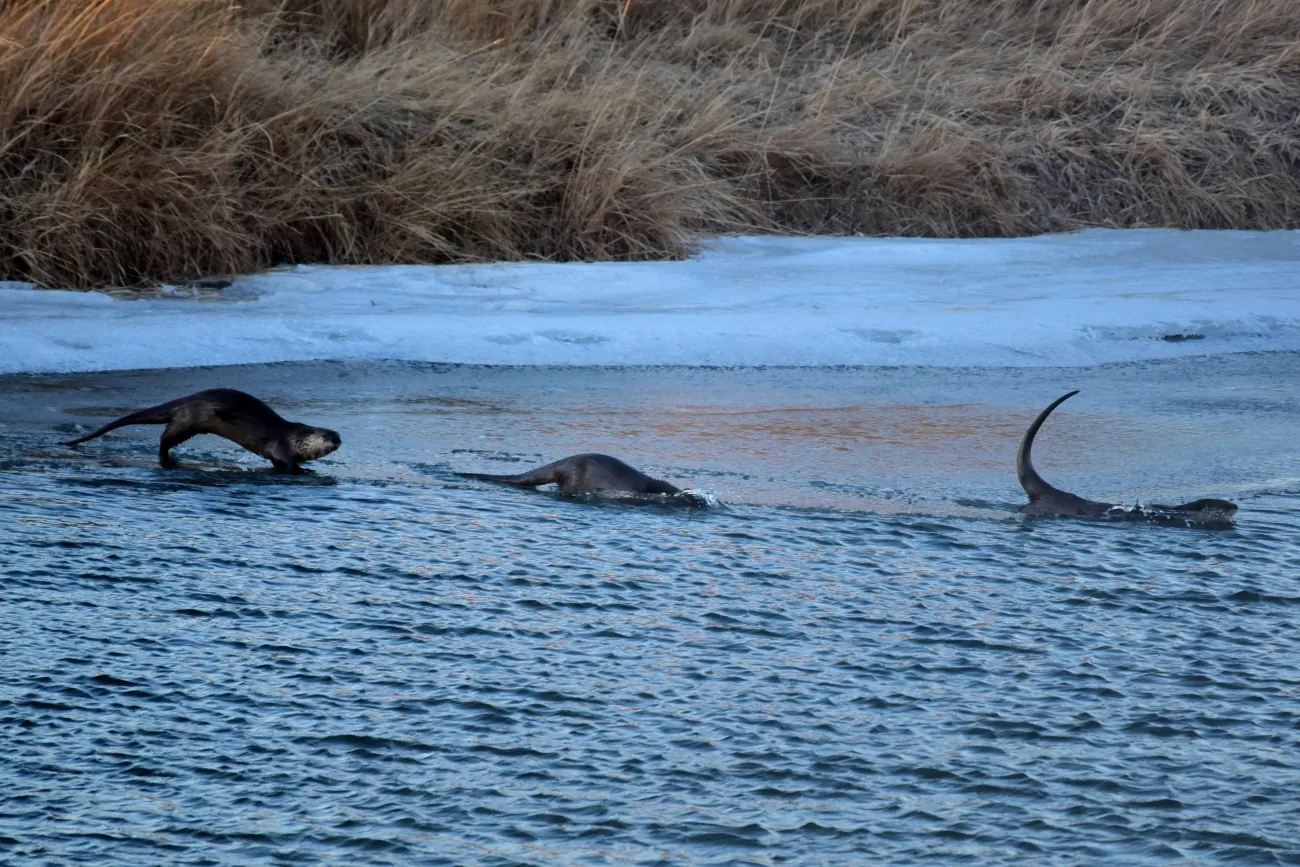
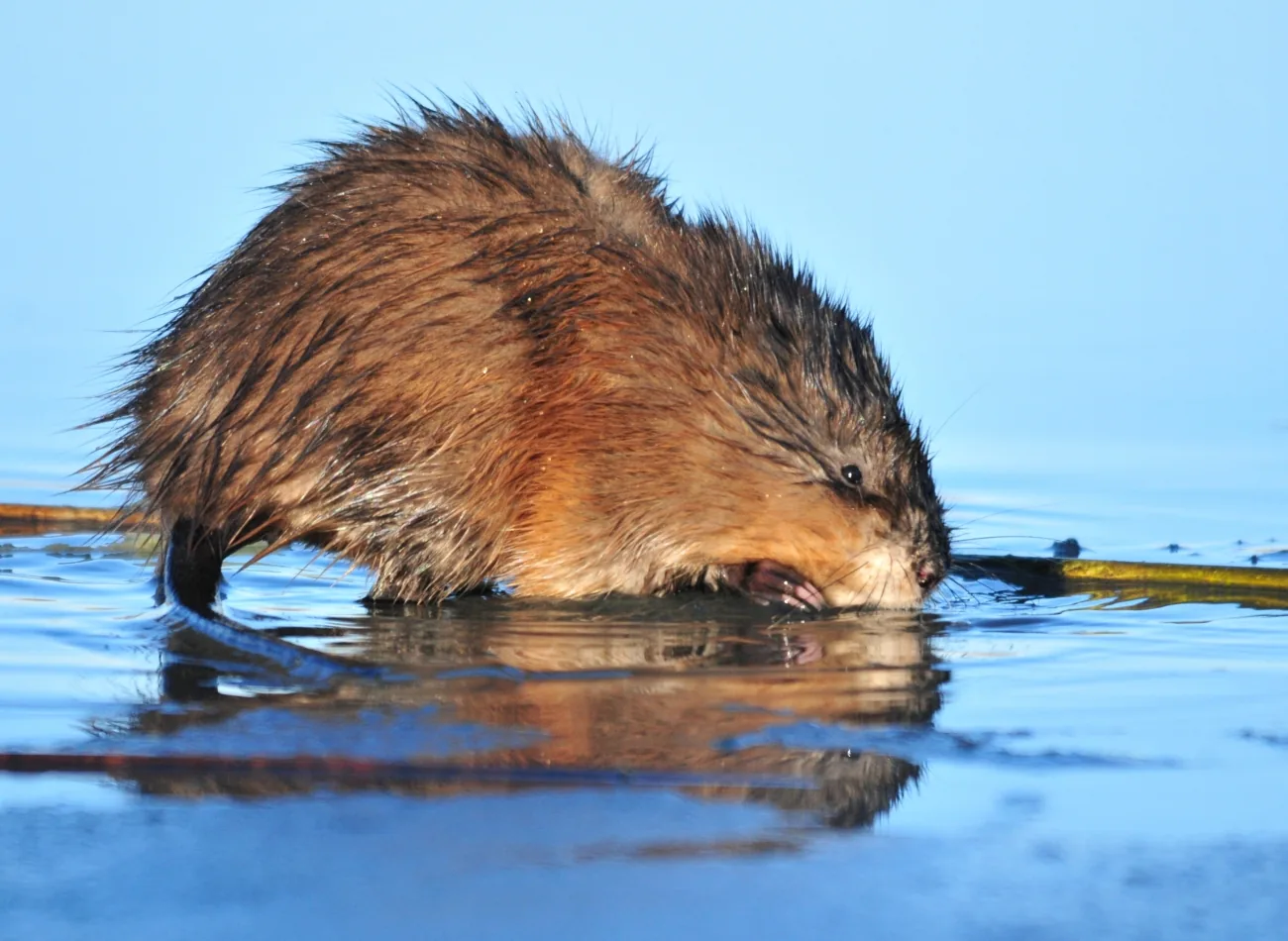
A brief sighting at the surface can make the Fox River's semi-aquatic mammals surprisingly easy to confuse. Size, body profile, tail shape, swimming behavior, and proximity to the bank become more useful when several of those clues point toward the same animal.
| Comparison | Muskrat | Beaver | Mink | River otter |
|---|---|---|---|---|
| Image |
|
|
|
|
| Scale | About 18–25 in. total | About 3–3½ ft.; commonly 25–60 lb | Roughly 17–26 in. total | About 34–53 in.; 10–30 lb |
| Surface profile / swimming | Compact and rounded; the head looks large for the body. Often rides close to the surface near shore; part of the back may show depending on speed. | Much bulkier; the head looks relatively small on a heavy body. Smooth, low swim with more mass behind the head. | Long, low, weasel-shaped; often more of the back shows. Quick, direct swimmer that frequently moves in and out of shoreline cover. | Longer, heavier, thick-necked. Often the head and neck dominate at the surface, followed by repeated dives and long underwater runs. |
| Tail | Long, narrow, nearly hairless, and flattened side-to-side. May trail visibly or scull just under the surface. | Broad, flat, leathery paddle; often submerged while swimming, unmistakable when seen. | Fully furred, tapered, and darker toward the tip. | Thick, fully furred, muscular, tapering to the tip. |
| Behavior & context | Usually tight to bank, vegetation, sloughs, or backwaters. May carry plants and disappear into submerged bank entrances. | Chewed woody stems, slides, bank dens, dams, or lodges. Juveniles can confuse size at distance. | Hunts along rocks, roots, and banks; alternates readily between land and water. | More aquatic and wide-ranging; may surface well off bank or appear in pairs or family groups. |
What Their Return Says About the Fox
River otters are useful animals to think with because they force us away from simple measures of river health. They live high in the aquatic food web and depend on a functioning mix of fish, crayfish, amphibians, cover, shoreline access, and connected habitat. A waterway has to provide enough of those things, consistently enough, for an otter to make use of it.
The modern Fox appears to be providing more of that ecological function than it once did.
At the same time, otters are poor candidates for romanticizing a river into purity. As predators, they can accumulate contaminants from the prey they consume, and researchers have used them as biological sentinels for exactly that reason. An otter may be successfully feeding in a river that still carries the effects of industrial chemicals, sediment contamination, runoff, habitat fragmentation, and other long-standing pressures.
That combination is probably the most useful way to understand their return. The Fox has recovered enough biological capacity to support an animal that had largely disappeared from the watershed, even while the river continues to carry the consequences of nearly two centuries of human use.
There is no realistic path back to the river of the 1850s. The landscape around the Fox has been transformed too completely. Towns that were small settlements when otters were last mentioned in the historical record now sit directly against the river. Roads cross it. Stormwater reaches it from subdivisions and commercial development. Wastewater enters it. Dams still shape portions of it. Floodplains have been lost in some places and restored in others.
Recovery in a river like this is necessarily partial, uneven, and ongoing. It is measured in functions regained, habitat reconnected, water quality improved, and native species returning to places where they had become scarce or absent. Otters fit naturally into that story because their presence depends on several pieces of the system working at once.
There is a satisfying coincidence in telling that story on a site called Dive Otter Outfitters. The name came from somewhere else entirely, long before the Fox River became the focus of this work, but the animal happens to belong here too.
A person drifting quietly along the Fox near St. Charles, fishing the mouth of a tributary, or walking beside Ferson Creek now has some chance of seeing a dark head break the surface and disappear again. For most of the last century, that would have been an unusual enough event to merit a formal record.
Today, it is becoming part of the river again.