
Rock looks simple from above. Underwater, the size and arrangement of the stones can create cover, sheltered water, depth changes and a concentrated food web. Understanding riprap begins with seeing the habitat the rock creates, not simply the rock itself.
I have spent enough time around riprap to recognize it immediately and not enough time catching bass from it to pretend I have figured it out. On the Fox River, there are stretches where broken rock runs along the bank for hundreds of yards. From a kayak, much of it looks remarkably similar. The visible portion may change a little in stone size or slope, but at fishing speed it is easy to reduce the whole thing to one category: rocky bank.
That is more or less how most fishing advice treats it. Fish the riprap. Work the rocks. Pay attention to the corners and transitions. In spring, somebody will inevitably add that the rocks warm the water. None of that is necessarily useless, but it skips the part I wanted to understand. A bass does not experience three hundred yards of shoreline at once. It occupies a small piece of a three-dimensional underwater environment, and two stretches of riprap that look almost identical from above may provide very different places to hold, feed, avoid current or disappear into cover.
Since I do not have enough success on Fox River riprap to turn personal experience into authority, I went looking for the underlying habitat research instead. What I found was more useful than another list of riprap techniques. Bass do not appear to respond to rock simply because it is hard substrate. They respond to what the rock creates.
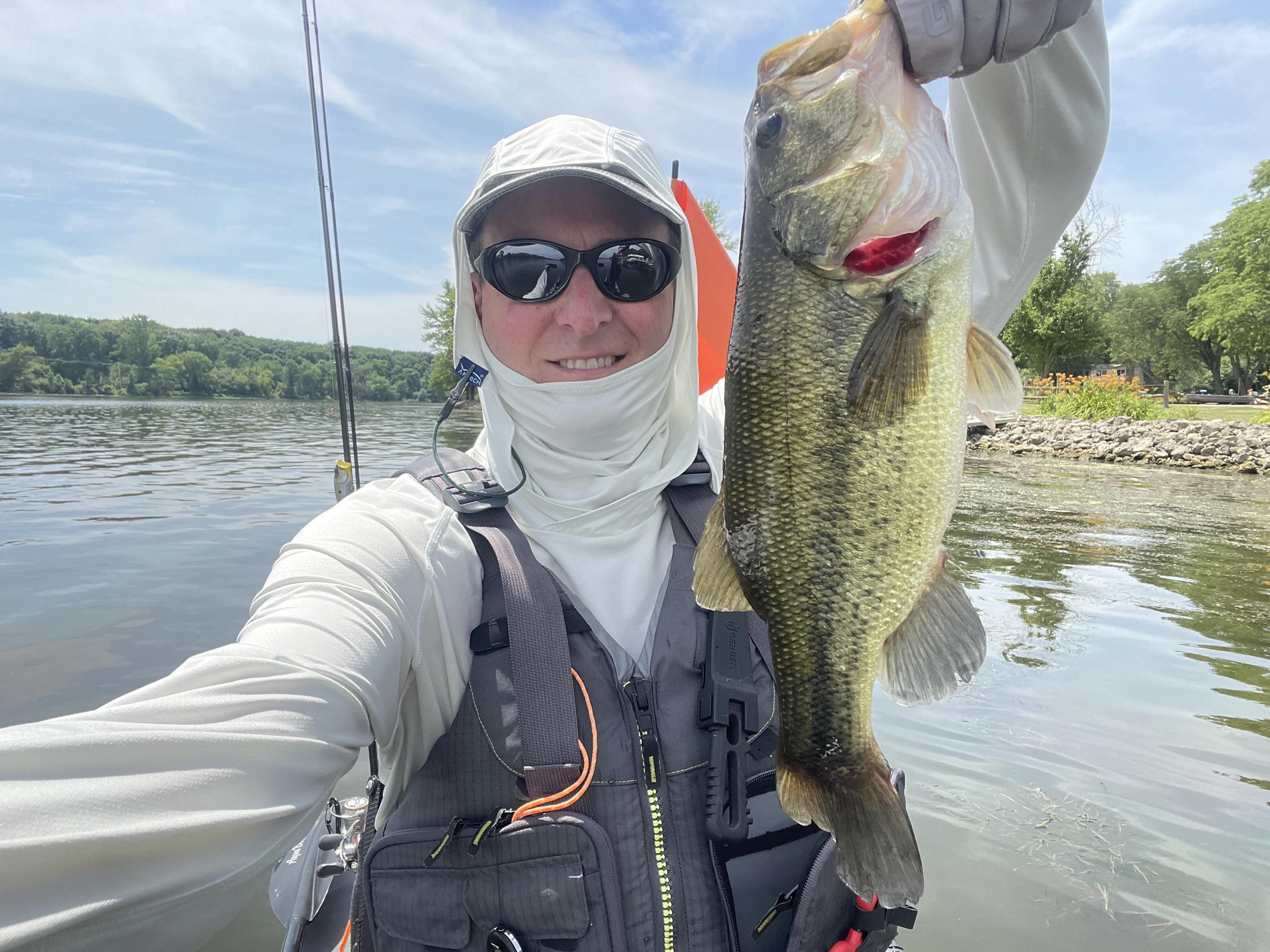
When Rock Becomes Habitat
One of the clearest demonstrations comes from a smallmouth bass study conducted in a laboratory stream at Ohio State in the 1980s. Researchers varied light, current, cover and substrate while observing juvenile and adult smallmouth. The available bottom included sand, gravel, large boulders packed with smaller cobble, and boulders with the smaller material removed from the spaces between them.
The fish strongly preferred slower current, lower light and usable cover. The substrate result was more interesting. Smallmouth did not consistently choose gravel or boulders merely because those bottoms were rocky. The behavior changed when the arrangement of the boulders created spaces the fish could actually enter and use. With cobble removed and the spaces between the rocks enlarged, adult smallmouth spent substantial time beneath the boulders. The researchers concluded that substrate itself became important when it provided cover.
That distinction is easy to lose in fishing language because we tend to use words such as rock, gravel, riprap and hard bottom as though they describe habitat completely. They do not. A bank armored with tightly packed fist-sized stone may provide plenty of hard surface but relatively little physical space for an adult bass. A bank constructed from irregular foot-wide stones can contain cavities, ledges, shaded recesses and openings large enough for the fish itself. Both are riprap, but they do not give a bass the same environment.
Reservoir research points in the same direction. In Normandy Reservoir in Tennessee, biologists divided shoreline habitat into gravel, natural rubble, mixed substrate, coves and placed riprap. The riprap consisted of large rock, generally more than a foot across, and represented only a small percentage of the habitat they surveyed. Smallmouth abundance was nevertheless highest there, and largemouth used it heavily as well. The authors emphasized the importance of rocky habitat containing large spaces between the rocks.
It would be tempting to turn that into another simple rule and say that larger rock is better. Larger stone is capable of creating fish-sized structure that smaller, tightly packed material often cannot. Rock size matters partly because the animal using it has size. A two-inch crack may be excellent habitat for an aquatic insect and meaningless as cover to an adult bass. A void beneath two large stones can provide enough room for the fish, overhead protection and reduced light at the same time.
A later Virginia study adds a useful caution against equating visible variety with useful structure. Researchers evaluated depth, velocity, cover, substrate particle size and substrate heterogeneity in two streams and then tested how well those habitat criteria transferred from one river to another. Their measure of substrate heterogeneity did not prove particularly reliable as a general predictor of smallmouth habitat. In other words, a bottom containing a wide mixture of particle sizes was not automatically more useful simply because it was more varied.
Larger substrate still mattered. Larger smallmouth in their study selected areas containing substantial amounts of large cobble and bigger material, while rock ledges and velocity shelters repeatedly appeared as useful forms of cover. Taken together with the laboratory work, the studies point toward a practical way to read riprap: pay attention to the shelter, space and slower water the stones create at the scale of a bass.
The Rock Changes the Water
That question becomes even more important in a river, because the rock is not simply sitting in water. It is changing the water around it.
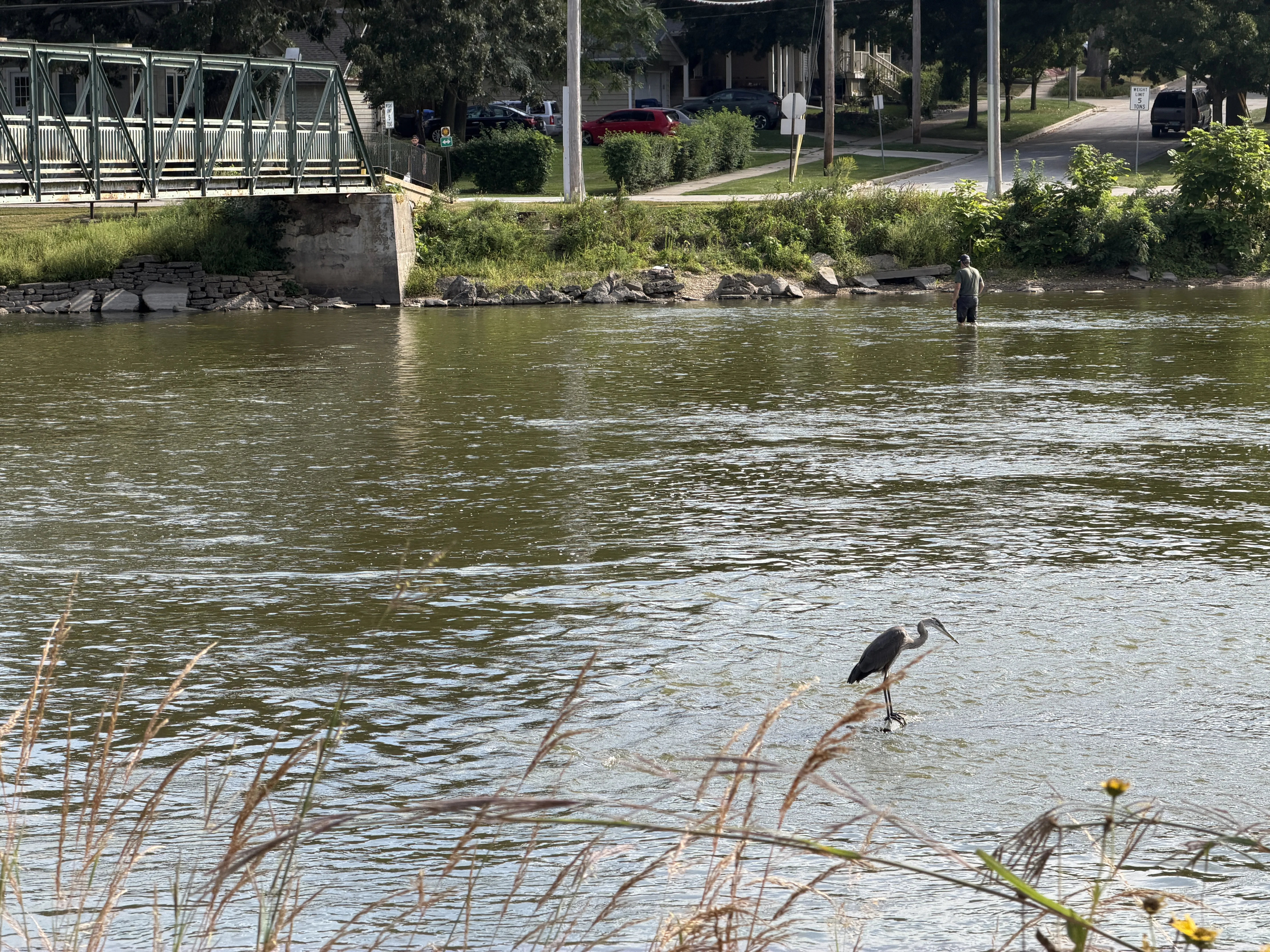
Researchers measured both the average velocity through the water column and the velocity at the actual position occupied by smallmouth bass. Across their observations, the fish consistently occupied water moving more slowly than the surrounding average. That does not mean every smallmouth was tucked behind a stone or sitting in slack water. It means the hydraulic environment experienced by the fish could be substantially different from the riverwide current an angler sees from above.
Engineering research helps explain how those differences develop. The Bureau of Reclamation's work on rock ramps and boulder clusters describes large stones as obstructions that force water to contract, accelerate, separate, form eddies and expand again downstream. Flow around a single boulder can be sufficiently complicated that ordinary one-dimensional hydraulic models cannot describe the local conditions accurately. Scour can also form near the base of large stones, adding small depressions and depth changes to the structure.
That turns a river riprap bank into something much more complicated than a line of rocks along shore. One stone may project far enough into the flow to create faster water around its outer face and slower water nearby. Another may sit low enough that much of the current passes over it. Several stones may combine to create a larger sheltered area. A depression scoured near the base may give a fish another few inches or feet of depth that cannot be seen from the kayak. Over hundreds of yards, those effects are repeated at different scales and under different amounts of current.
We have already covered the larger system in How Current Positions River Bass: fish often benefit from places where moving water and reduced-current habitat lie close together. Riprap creates another layer within that system. A bridge opening, island or channel edge may determine the current pattern across a broad section of river, while individual rocks determine what the last few feet of that pattern feel like to a fish.
That is a more defensible explanation than the familiar claim that bass simply sit behind rocks. Sometimes they almost certainly do. At other times the useful position may be beside a rock, under one, in a scour depression or within a larger pocket created by several stones. The general principle is supported far better than any single positional rule: large rock creates local differences in velocity, and smallmouth frequently use water moving more slowly than the surrounding flow.
Depth Determines How Much of the Rock Matters
Riprap is usually described as shoreline cover, which encourages us to think about its length. A bank starts at a bridge, runs for several hundred yards and ends at a patch of natural shoreline. Bass experience another dimension that is just as important: how the rock continues beneath the surface.
A steep riprap bank may place shallow rock, intermediate-depth rock and substantially deeper water within a short horizontal distance. A shallow apron can extend much farther before reaching the same depth. If the water level drops, a large portion of either structure may disappear from the aquatic environment entirely. The visible bank can therefore remain almost unchanged while the amount of usable underwater structure changes considerably.
Smallmouth habitat studies repeatedly identify depth as important, though they also show why exact numbers should be treated cautiously. Researchers found that broad depth patterns transferred better among rivers than precise site-specific values. Larger fish often used deeper water than smaller fish, but the exact depths identified as optimal changed with the stream. Another study found something similar in an Arkansas system undergoing severe summer low flow. As wetted habitat contracted, smallmouth continued using areas that retained sufficient depth and suitable coarse substrate rather than simply occupying whatever rocky bottom remained.
That helps explain why two sections of visible riprap may function very differently underwater. One section may continue into several feet of water before ending. Another may spread across a shallow apron and terminate in silt. One may intersect a channel or scour depression. Another may lie beside a broad flat of similar depth. From above, both can look like the same bank.
Slope matters within this framework, but not because steep riprap appears to possess some independent attraction to bass. Its importance is geometric. Slope determines how quickly the rocks pass through different depths and how closely shallow structure lies to deeper water. The same amount of exposed stone can therefore produce very different underwater environments depending on how the bank was constructed and what lies beyond its toe.
This is also where the distinction between rivers and impoundments begins to sharpen. In moving water, current constantly modifies the usefulness of the rock by creating velocity shelters, acceleration and scour. In an impoundment, those hydraulic effects may be minor for long periods, leaving depth geometry and structural access to carry more of the load. The underlying habitat ingredients remain similar, but their relative importance changes.
A Rocky Bank Is Also a Food-Producing Surface
The physical structure alone would make riprap interesting, but coarse rock can also change the local food web.
A study of riprap grade-control structures in a heavily altered Iowa stream compared macroinvertebrates living directly on the placed rock with nearby areas dominated by sand and silt. The differences were substantial. Macroinvertebrate density on the riprap ranged from roughly twice to more than one hundred times the density found at many of the surrounding soft-bottom sites, and biomass was also significantly greater. A natural coarse-substrate riffle produced similarly high numbers. The artificial rock was not biologically special because it had been installed by people. It was providing coarse substrate and physical complexity that were scarce in the surrounding stream.
The organisms included caddisflies, midges, beetles, mayflies and other aquatic invertebrates. They matter because coarse rock does not simply provide a place for bass to sit. It also creates surfaces, cracks and protected spaces occupied by organisms lower in the food chain. The same physical complexity that shelters a bass at one scale can shelter prey at another.
That gives us a stronger explanation than the common shorthand that riprap is good because it holds crayfish. Crayfish are important prey for smallmouth in many systems and almost certainly contribute to the value of rocky habitat, but they are only one part of a much broader bottom-dwelling community. The evidence supports the idea that coarse rock can concentrate food production locally without requiring us to reduce the entire relationship to a single prey species.
Anglers tend to evaluate habitat according to whether it holds the species we want to catch. A riprapped bank can be useful bass habitat while still replacing natural river processes that would otherwise create vegetation, undercut banks, woody cover, sediment movement and a more complicated shoreline. Bass using riprap is not evidence that rivers would be ecologically improved by adding more of it.
What the Research Leaves Open
The most interesting part of this research may be how little support there is for some of the confident rules surrounding riprap fishing.
One common recommendation is to search for anything that interrupts a uniform bank: a larger stone, a gap, a culvert, trapped wood, the end of the riprap, a transition to gravel or mud. That makes good physical sense. Each of those features can change depth, cover, current or substrate, and sometimes several at once. I intend to pay more attention to those places because the mechanism is reasonable, but I cannot claim the studies I found demonstrate that bass consistently prefer them.
The same restraint applies to the toe of the riprap, where placed rock ends against the original river or reservoir bottom. It is an obvious structural transition and may be important in many waters, but a logical fishing hypothesis is not the same thing as an established habitat relationship. The research gives us better questions to ask without giving us permission to turn every plausible idea into a rule.
The familiar spring explanation that riprap attracts bass because sunlight warms the rocks is even less secure. Riprap can unquestionably be productive during cold-water periods, and anglers have observed that pattern for decades. What I have not found is convincing evidence that significant warming of the surrounding water by sunlit stones explains the pattern. Access to multiple depths, abundant prey living among the rocks, physical cover and the location of causeways, bridge approaches and dam faces all provide plausible mechanisms without requiring the rocks themselves to act as underwater radiators.
That is a useful reminder beyond riprap. Fishing knowledge often begins with a real pattern and then accumulates an explanation because anglers dislike leaving the mechanism blank. Sometimes the explanation survives scrutiny. Sometimes the pattern is real and the explanation is not.
I still do not know exactly where a bass will be the next time I reach a long stretch of riprap on the Fox River. What has changed is what I will be looking at. Instead of treating the bank as one piece of cover, I will be paying attention to the scale of the stones, whether there are spaces large enough for a bass to use, how quickly the bank reaches meaningful depth, whether the rock continues to that depth, how current contacts the structure and whether particular stones project far enough to create obvious hydraulic effects. I will pay more attention to scour, the submerged end of the rock and places where the character of the structure changes, not because the research guarantees fish there but because those are places where the habitat itself is changing.
That is a much better starting point than “fish the riprap.” The phrase tells us what the shoreline is made of but very little about what exists underwater. A bass does not use a bank because an angler has classified it as riprap. It uses the cover, depth, sheltered water and feeding opportunities created by a particular arrangement of stone in a particular body of water. The rock is the material. The habitat is what the material makes possible.