
I used to carry five full-size tackle boxes on the kayak. Now I carry two, and the tackle I actually depend on would probably fit into one. That change came from fishing the same river often enough to learn which presentations I really use.
A few years ago, I carried five full-size BUZBE tackle boxes in the kayak. They were packed with crankbaits, plastics, jigs, topwaters, terminal tackle, and enough variations of each that I could usually find something to support whatever idea occurred to me on the water. I still like trying new tackle, so the collection has not stopped growing at home, but the amount that comes with me has changed considerably. These days I carry two boxes, and if I cared enough to reorganize them, the baits I actually depend on would probably fit into one. I simply do not want to combine the two boxes I already have arranged the way I like them.
The reduction was gradual enough that I did not really notice it happening. Trip after trip, the same baits came out while most of the others stayed put, and eventually hauling five boxes around stopped making much sense. There was also an unexpected benefit to reclaiming that space: my cooler now fits inside the BlackPak behind the seat, which made the whole rear storage area of the kayak work better. I was no longer choosing from a large tackle collection so much as recognizing a kind of cover and reaching for the presentation I already trusted there.
Bridge pylons: the Ned rig
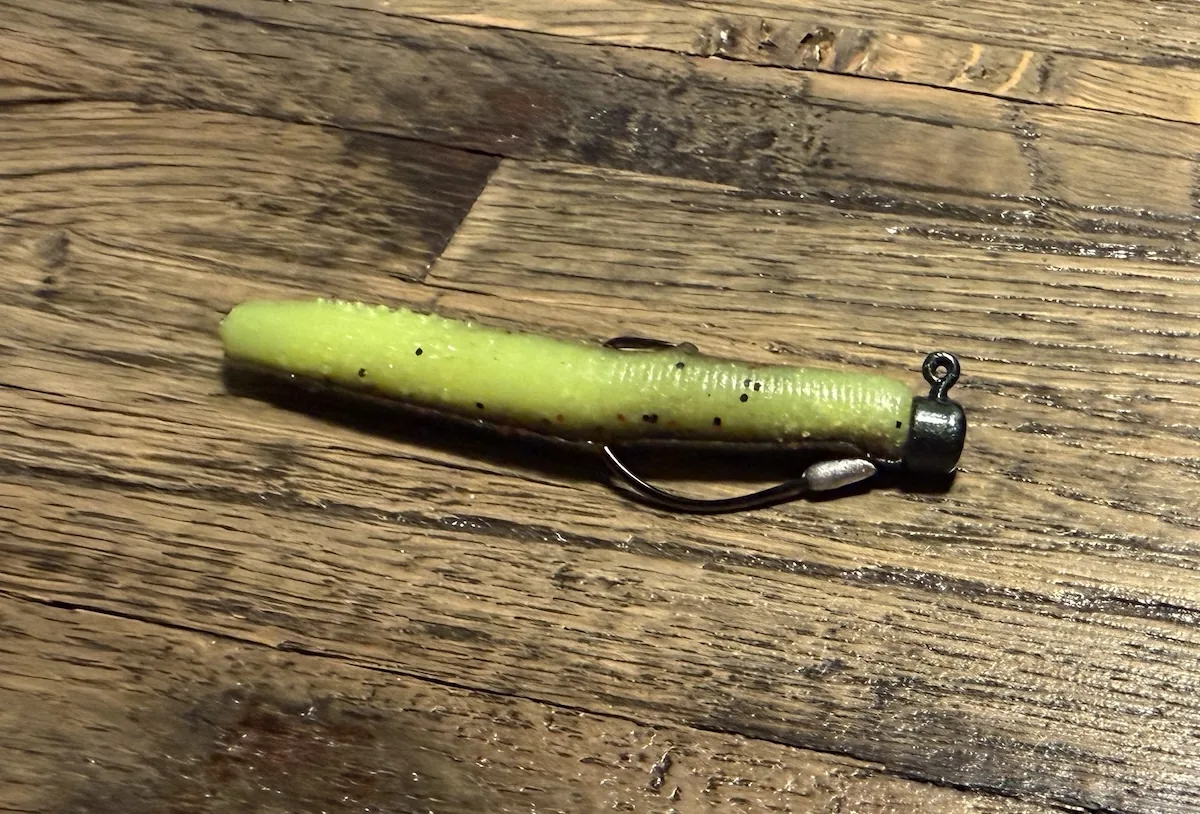
Bridge pylons are the easiest place to start because the choice has become nearly automatic. My normal setup is a Z-Man Finesse TRD in Coppertreuse on a 1/8-ounce NedlockZ EWG jighead, although I carry a couple of other weights for changes in current and depth. I prefer the EWG because I want the hook point protected around rock, debris, vegetation, and all the other things a river seems able to collect around bridge structure. I have no particularly elegant explanation for why the Ned has been so dependable there. I only know that after trying plenty of other things around pylons, it remains the presentation I trust most.
I usually try to land the bait near the upstream edge of the pylon and let the current carry it down the side rather than hopping it aggressively along the bottom. More hopping has generally meant more snags for me, so I do as little as I can get away with and let the river provide most of the movement. The bites tend to come along the back half of the pylon or around the downstream edge, and they are often subtle enough that I do not feel anything I would call a hit. Instead, the line starts moving in a way the current does not explain, either slipping sideways, moving downstream differently, or coming out of the flow. That is usually my cue to set the hook.
Submerged grass and bank edges: Hazedong Shad
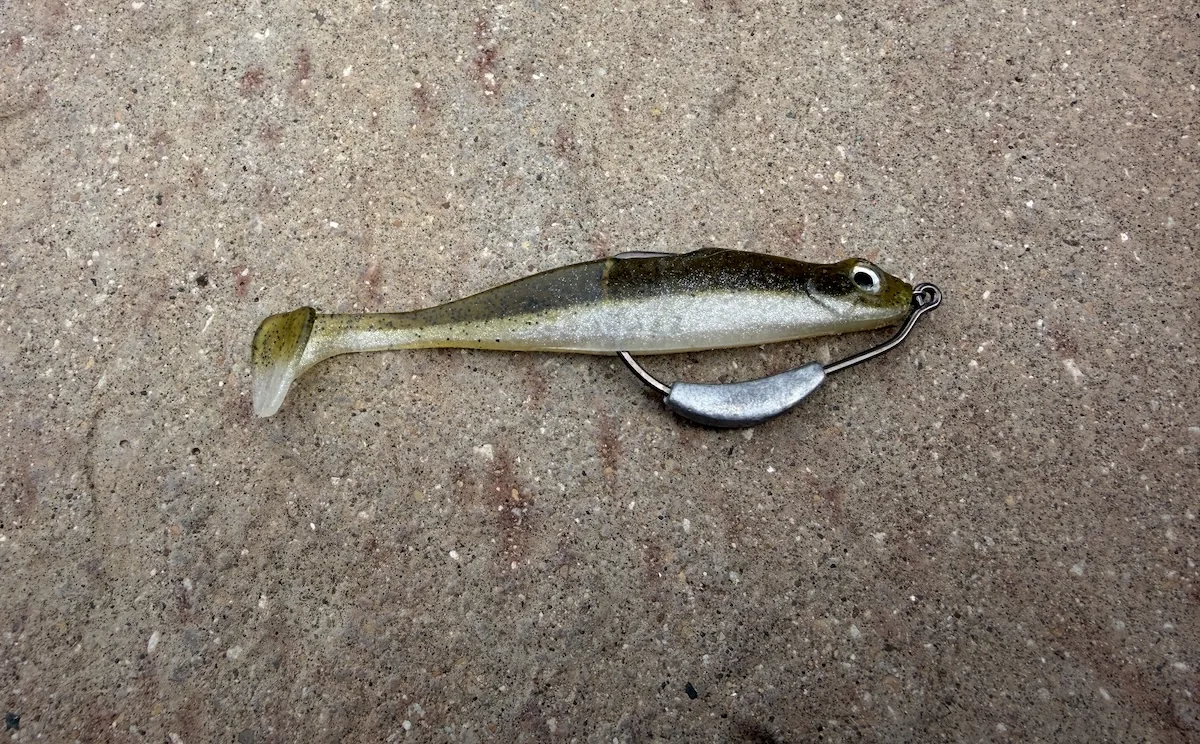
My most common moving bait is a Megabass Hazedong Shad 4.2, usually in Green Pumpkin Chart. I also carry a lighter baitfish color such as Shio Kosho, Ayu, or Hiuo, but I have never seen enough difference among those colors to build much of a theory around them. The 4.2-inch bait normally goes on a keel-weighted swimbait hook, usually a 2/0 or 3/0, and I fish it in and around submerged grass or along river-bank edges with a steady retrieve. There is not much more technique to it than that. I want the bait moving naturally in and past the cover, and I try not to improve it with more rod movement than it seems to need.
Part of my confidence in the Hazedong comes from actually watching smallmouth respond to it. I have seen fish come out of submerged grass and chase the bait down, which is hard evidence to ignore when deciding what should stay tied on. It also happens to be a relatively expensive soft plastic, and I have made a legitimate effort to replace it with cheaper options. Various custom-poured ribbed paddletails with a profile similar to a Scheels Pro Swimmer have caught fish for me, but on the Fox I have had materially better success with the Megabass. I do not know what accounts for the difference, but I have caught enough more fish on the Hazedong that I keep paying for it.
Grass lines: Megabass PopX
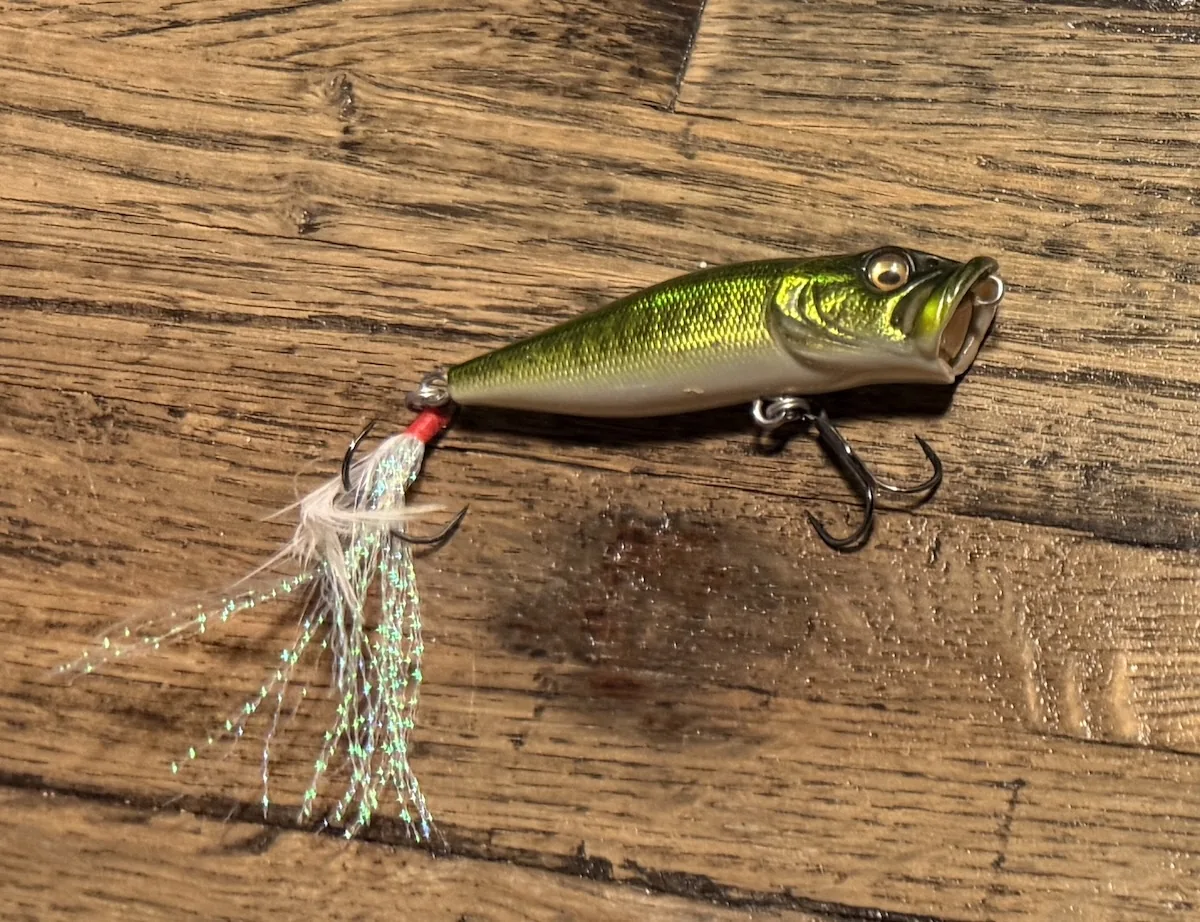
When the grass creates a defined edge at the surface, I usually move to a Megabass PopX. The one most often tied on is GG Bass, although this is another place where color has seemed much less important than anglers sometimes make it. I have not noticed a meaningful enough difference to spend much time sorting through patterns. What matters to me is being able to work the bait directly along the edge and stop it where a fish holding in or beneath the grass has time to react.
My retrieve is a simple pop-pause cadence, with the pause usually lasting a second or two. Most of my strikes have come while the bait is sitting still, which is probably why I have never felt much need to make the retrieve more complicated. I work down a grass line with a couple of pops and then let the bait sit for a second or two before moving it again.
Docks, laydowns, and light grass: one jig, two presentations
Around docks, laydowns, and lighter vegetation, I usually carry a 3/8-ounce Dirty Jigs jig, often in War Mouth simply because that is what I tend to have in the box. As with the PopX, I have not seen enough difference in jig color to spend much time choosing among them. What makes this jig useful is that I can fish the same head in two very different ways by changing the trailer, which has kept me from carrying separate jigs for jobs that overlap more than they differ.
When I want to keep moving, I put a Hazedong Shad on the back and swim the jig with a steady retrieve. That gives me a moving presentation I can bring through dock edges, laydowns, and light grass where I want something more cover-friendly than the Hazedong by itself. If I decide I want to slow down and work a particular target, I replace the swimbait with a 3-inch PowerBait Chigger Craw in Green Pumpkin Fleck, pitch or flip it into the cover, let it fall, and hop it through or alongside whatever I am trying to pick apart. There is no precise environmental threshold that tells me when to switch. Sometimes I want to swim the bait and sometimes I want to work it, and the same jig handles both without asking for another compartment in the tackle box.
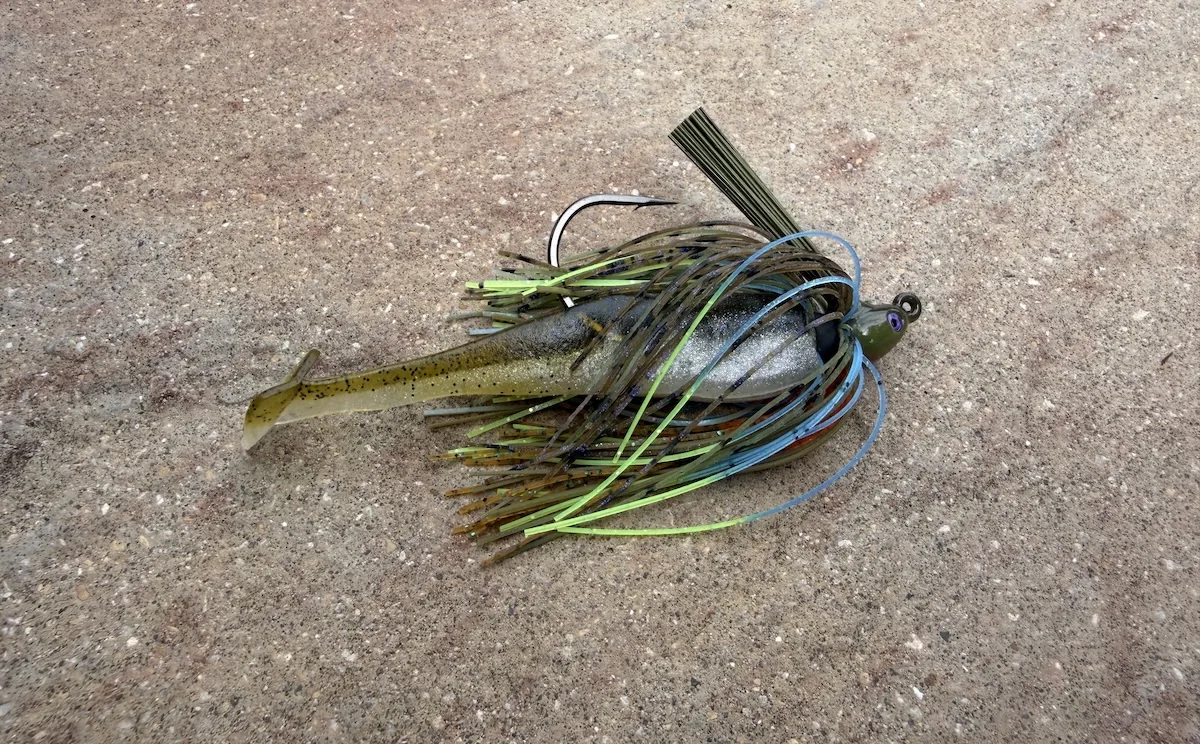
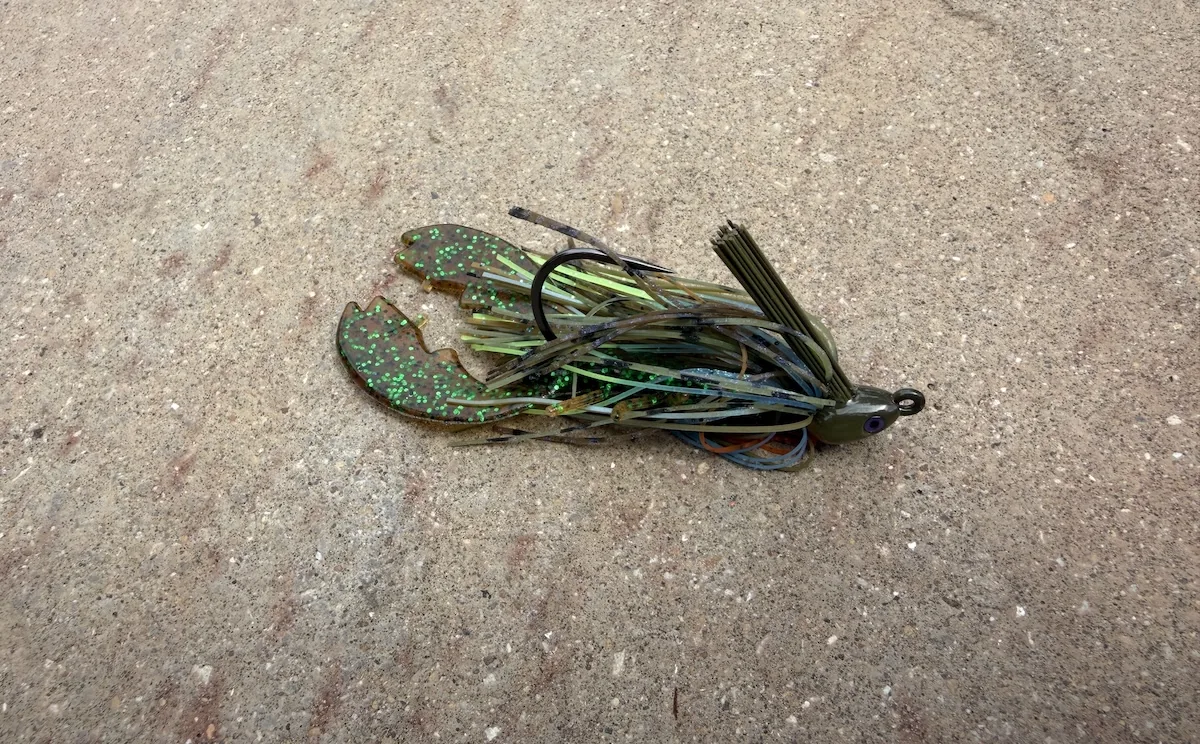
That is one of the more useful things I have learned as the tackle system has shrunk. A bait does not necessarily need its own distinct category simply because the retrieve changes. In this case, the trailer and the way I fish it matter more than carrying one jig labeled for swimming and another labeled for flipping.
Heavy vegetation: the frog
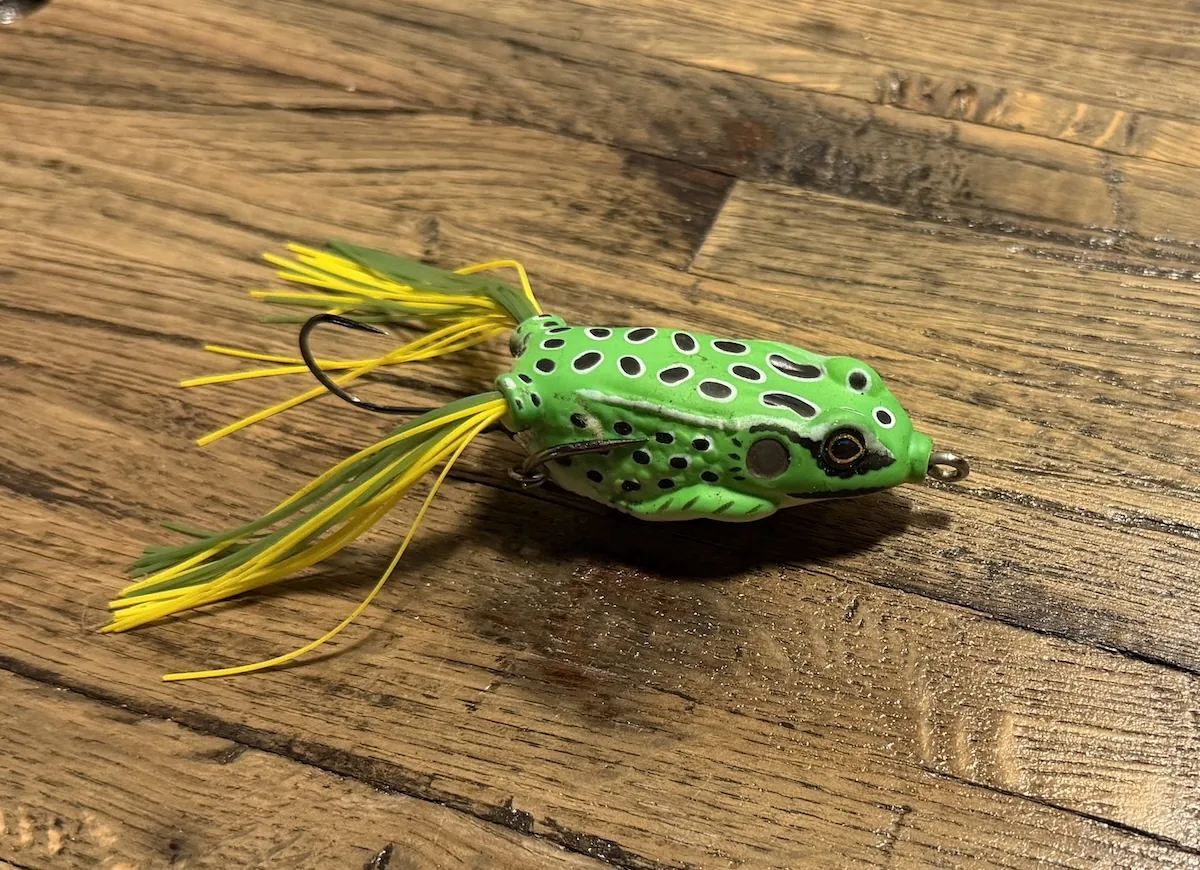
Heavy vegetation, particularly lily pads, is one of the few situations where the presentation is settled even though the product is not. I know I want a frog when the cover gets thick enough, but I have not found a particular frog I like enough to recommend by name. I usually work it with short pops across the vegetation and pause it in the holes, giving the bait some time in the open water before moving it again.
My hookup percentage with frogs has never been particularly good, so lately I have been experimenting with a Lake Fork frog tail hook when the cover is open enough to tolerate the extra hardware. The idea is simply to give myself another chance at fish that do not take the bait cleanly, but I do not yet have enough experience with it to say whether the hook materially improves my results. In really heavy cover I leave it off anyway, because adding exposed hardware starts to work against the whole reason for choosing a frog. For now, the frog remains a permanent part of the system while the specific frog, and some of the details around how I rig it, are still being worked out.
When I want more thump: War Eagle River Rat
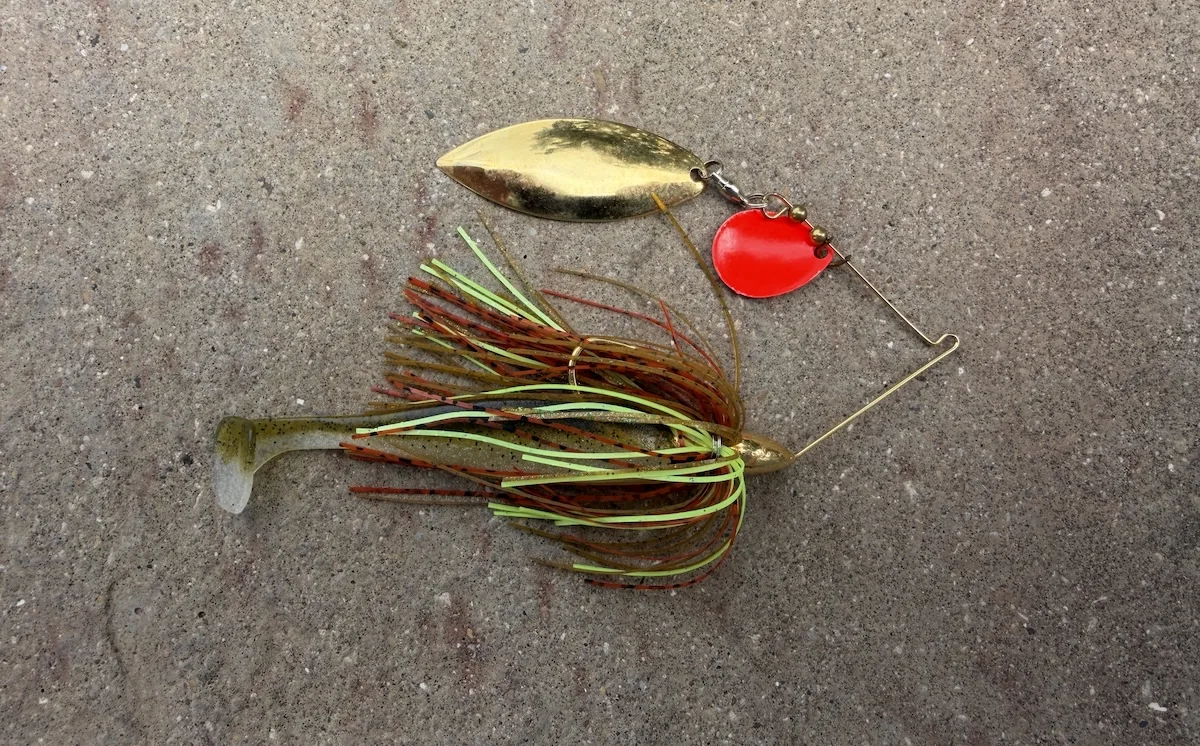
The Hazedong is still the moving bait I prefer most often, but sometimes I want considerably more vibration and flash while fishing the same general bank edges and grass. That is where the 3/8-ounce War Eagle River Rat fits. Mine has a gold Colorado main blade and a red willow kicker, and I usually add a Hazedong Shad as a trailer. I fish it on the same kind of steady retrieve I use with the swimbait, so switching to the spinnerbait does not really change the way I cover the water; it changes how much signal the bait puts into it.
I do not have a clean rule for exactly when the River Rat replaces the Hazedong. My fishing model will sometimes point toward a spinnerbait, and there are days when I simply want something with more thump and flash than a soft paddletail. I have not noticed enough difference in skirt color to care much about that variable either. The useful distinction is simpler: the Hazedong is my normal moving bait, while the River Rat is what I reach for when I want the same general kind of presentation to be much louder in the water.
Everything else
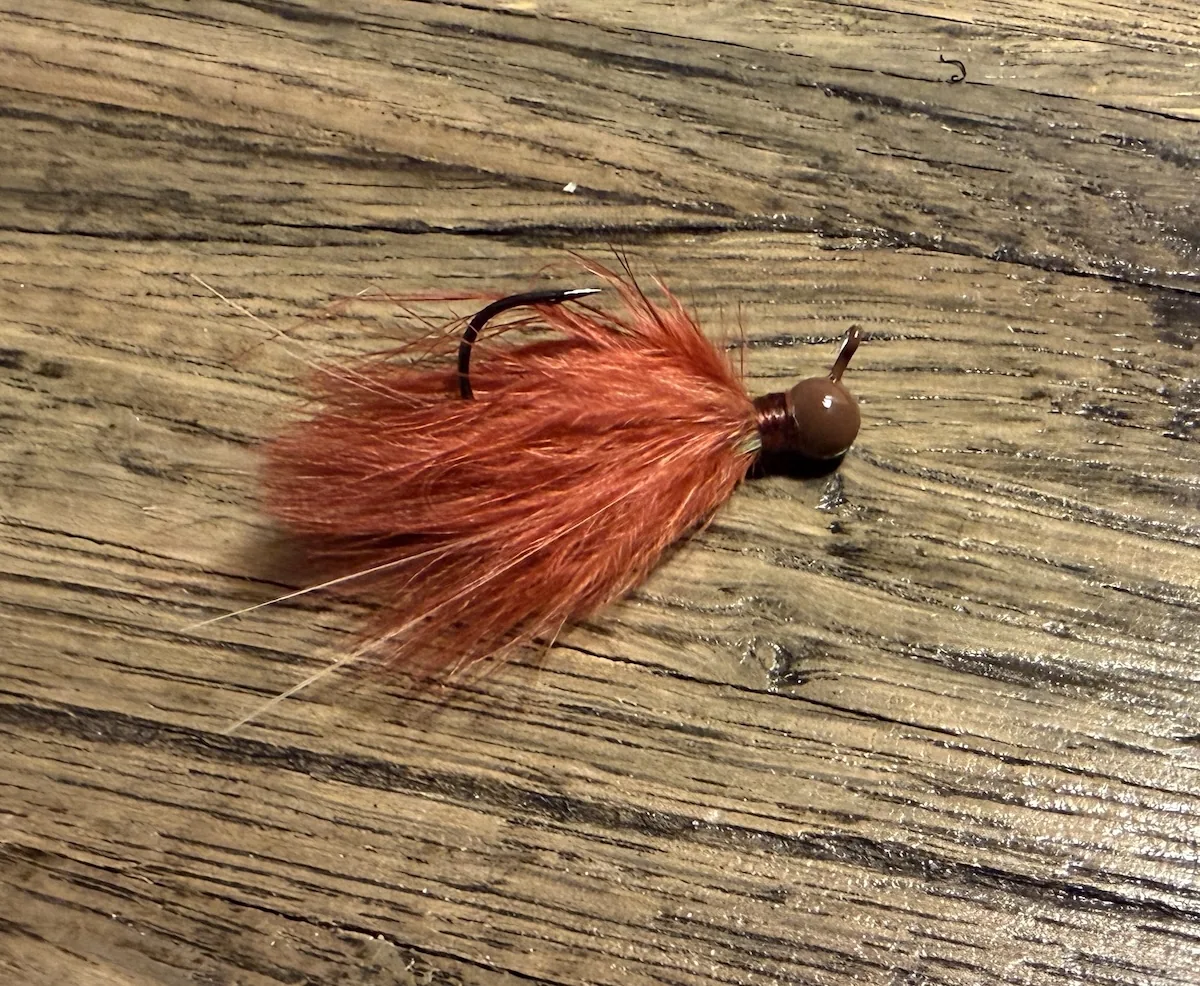
There is still plenty of other tackle in the kayak. I carry a 3/32-ounce hair jig tied by a local guy, usually in dark brown or purple and fished without a trailer, but I mostly use it after I have thrown the Ned long enough that I want to do something different. I have also been experimenting with a number of Core Tackle products and other baits that interested me enough to try. Some may eventually become regulars, but none has replaced one of the staples above or given me a completely new reason to make room for it.
That is probably the biggest difference between the five-box tackle system I once carried and what goes into the kayak now. I used to bring a lot of tackle because there was some chance I might want it; after enough time on the same river, I have a much better idea of what is actually going to come out of the box. A pylon usually means the Ned. Submerged grass or a bank edge puts the Hazedong in my hand. Surface grass makes me think PopX. Docks, laydowns, and light vegetation usually get the jig, heavy pads get a frog, and the River Rat comes along when I want more vibration from a moving bait.
I still expect that list to change. New baits keep showing up, I keep trying them, and eventually something will probably prove useful enough to displace one of the old choices. Until then, two tackle boxes are more than enough, even if I am still too stubborn to combine them into one.