For a while, I thought more rods meant better fishing.
Six stood behind the seat of my kayak. Another was usually in my hand, and one more often rested across the deck for a quick follow-up cast. At the launch, the system felt efficient. Every likely presentation was already tied on, and changing techniques required little more than reaching over my shoulder.
It was considerably less efficient once the kayak started moving. On one trip, I was focused on the water ahead and failed to notice an overhanging branch. The kayak passed beneath it, the cluster of rods behind me did not, and one of them snapped before I fully understood what had happened. Another rod disappeared in a less complicated way. During a cast, I caught one of the rods standing behind me and launched it over the side. By the time I realized what I had hooked, it was already sinking. That rod is still somewhere on the bottom of the river.
Both losses came from carrying more equipment than the kayak and the river required. Modern fishing kayaks can accommodate an impressive number of rods, and that capacity has value during tournaments, long days on large reservoirs, or trips organized around several highly specialized techniques. It makes less sense on a compact river pool where the available water can be covered in a few hours.
The sections of the Fox River I fish are impoundments between dams. A trip may move from riprap to docks, bridge current, shallow wood, and vegetation, but those changes occur within a relatively contained piece of water. There is little reason to carry the kind of pre-rigged collection that may make sense on a bass boat covering miles of a large reservoir.
Three rods provide enough range to fish those transitions without turning the kayak into a floating rod rack. They remain accessible, leave room to paddle or operate a motor, and reduce the amount of equipment surrounding the angler while casting, maneuvering, and landing fish.
The regular system consists of a medium-light spinning rod, a medium spinning rod, and a medium-heavy casting rod. Together, those three cover light-line fishing, general bass work, moving water, docks, wood, moderate vegetation, and the ordinary range of fish found in smaller rivers.
Two additional outfits extend the system when a trip clearly favors one end of the spectrum. An ultra-light spinning rod replaces the medium-heavy casting rod when open water and light tackle dominate. A heavy casting rod replaces the medium spinning rod when dense vegetation or substantial cover requires considerably more power.
Five complete outfits may be ready at home. Only three go into the kayak.
Build Complete Outfits
A rod specification alone does not describe how a fishing setup will behave. The reel and line affect casting, balance, sensitivity, fish control, and the amount of pressure an angler can safely apply. Each recommendation in this system therefore includes a specific rod, reel, and line configuration rather than treating the rod as an isolated component.
The choices are intentionally narrow. Other combinations will catch fish, but a collection loses much of its value when several outfits handle the same weights, use similar line, and feel almost identical in the hand. The goal here is meaningful separation between roles.
Rod ratings also vary between manufacturers. One company’s medium-light may feel close to another company’s medium, and two rods labeled fast may bend very differently. The printed power and action should be considered alongside the manufacturer’s line and lure-weight ratings, with the finished rod loading smoothly through the portion of the blank appropriate to its job.
These specifications provide a dependable baseline for choosing production rods now and comparing them with custom-built versions later.
The Medium-Light Spinning Rod
Recommended Setup
The medium-light spinning rod is the foundation of the system. It provides the line control and sensitivity needed for precise work while retaining enough strength to manage a good river smallmouth in current. At 7 feet 2 inches, it gives useful reach from a seated position, helps control line angle across a seam, and makes it easier to keep pressure on a fish moving around the bow.
Medium-light power suits the ordinary scale of shallow-river fishing. The rod loads properly with light weights, allows modest fish to bend the blank, and protects thin line when a smallmouth changes direction beside the kayak. The extra-fast action keeps the tip responsive for precise presentation and pressure changes, but the blank should transition smoothly into its middle section as the load increases rather than feeling rigid through most of its length.
A 1500-size reel keeps the outfit light while providing enough spool diameter and drag performance for 6-pound fluorocarbon. A roughly 6.2:1 retrieve is fast enough to recover slack when current moves the line or a fish turns toward the kayak without making controlled line pickup feel hurried.
Straight 6-pound fluorocarbon completes the outfit. It provides direct contact and useful abrasion resistance for its diameter, but river structure demands routine inspection. Riprap, dock hardware, bridge concrete, and submerged wood can roughen the first several feet of line without causing an immediate failure, so checking and retying should become part of the normal rhythm of fishing this setup.
The medium-light spinning rod belongs on nearly every trip. Clear water, stained water, light current, bridge current, open banks, and moderate structure all fall within its range. Of the three standard rods, this is the one least likely to be left at home.
Build the Medium-Light Outfit
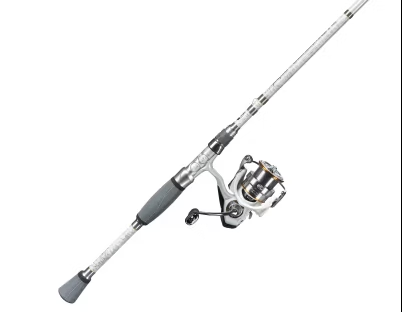
Value
Bass Pro Shops Johnny Morris CarbonLite 2.0
A dependable production outfit that delivers the recommended performance without the cost of premium equipment.
View CarbonLite 2.0 →
High End
A premium production rod offering lower weight, greater sensitivity, and a more refined feel on the water.
Recommendation Coming SoonThe Medium Spinning Rod
Recommended Setup
The medium spinning rod occupies the broad middle of the system. It handles ordinary river-bass work and bridges the gap between the light-line precision of the medium-light outfit and the stronger casting equipment carried for current and cover.
A 7-foot medium-power blank remains easy to manage from a kayak while providing enough length for accurate casting and fish control. The fast action should feel slightly more forgiving than the extra-fast medium-light rod, allowing the upper third of the blank to load easily before pressure moves progressively into the middle section.
A 3000-size reel gives the heavier spinning outfit a little more spool diameter, line capacity, and retrieve per turn without making it cumbersome. Paired with a roughly 6.2:1 retrieve and 10-pound monofilament, the setup gains a useful cushion when a fish surges beside the kayak or the boat shifts unexpectedly in current.
Monofilament also handles cleanly, knots easily, and is inexpensive enough to replace without hesitation after repeated exposure to rock, wood, vegetation, and shoreline debris. That makes sense on an outfit intended to see frequent, general-purpose use.
The medium spinning rod is the most adaptable setup in the collection. It can work around riprap, docks, open current, sparse wood, and scattered vegetation without feeling overly specialized. An angler carrying a single rod on a short or unfamiliar river trip could reasonably choose this one.
Build the Medium Outfit
Value
Bass Pro Shops Johnny Morris CarbonLite 2.0
A versatile production outfit that fits the general-purpose medium role without adding unnecessary cost.
View CarbonLite 2.0 →
High End
A premium production rod with improved balance, lighter components, and a smoother transition under load.
Recommendation Coming SoonThe Medium-Heavy Casting Rod
Recommended Setup
The medium-heavy casting rod completes the standard three-rod system. It adds the power missing from the spinning outfits while remaining versatile enough for the cover and current commonly encountered on a shallow river.
At 7 feet 3 inches, the rod provides additional leverage and line control without becoming awkward in the kayak. Medium-heavy power gives the angler enough authority to direct bass away from docks, submerged wood, rock, bridge structure, and moderate vegetation, while a fast action preserves accuracy and enough flex to keep ordinary river fish connected.
A 150-size low-profile reel is compact enough for repeated casting but has ample capacity for 15-pound fluorocarbon. A 7.3:1 ratio recovers line quickly when the kayak drifts toward the presentation or a hooked fish changes direction. For a right-handed angler, a left-hand retrieve also keeps the rod in the dominant hand from cast through fight without an unnecessary hand switch.
Fifteen-pound fluorocarbon gives the outfit the abrasion resistance and direct feel needed around harder cover. The combination provides enough strength to apply firm pressure when a fish cannot be allowed to move freely without turning the rod into a dedicated heavy-cover tool.
That distinction matters. This is the standard system’s power rod, but it remains a moderate-cover outfit. Dense mats, thick lily-pad fields, and situations requiring heavy braid belong to the specialized heavy setup.
Build the Medium-Heavy Outfit
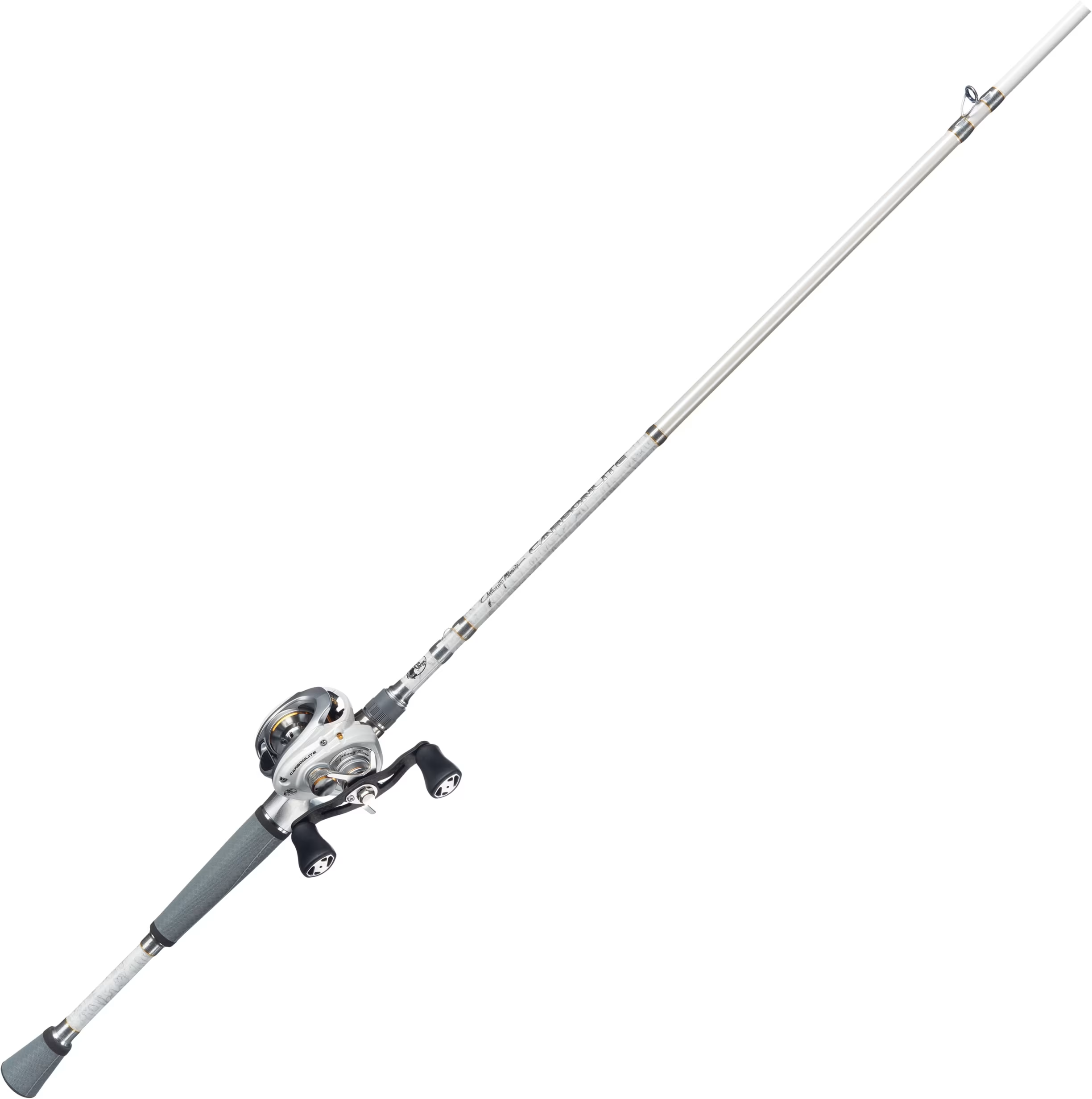
Value
Bass Pro Shops Johnny Morris CarbonLite
A capable production casting outfit with the power needed for current, docks, wood, rock, and moderate vegetation.
View CarbonLite →
High End
A premium casting rod with better balance, lower weight, and more precise control around current and cover.
Recommendation Coming SoonThe Standard Three-Rod Loadout
For most shallow-river kayak trips, the loadout is a 7-foot-2-inch medium-light extra-fast spinning rod with 6-pound fluorocarbon, a 7-foot medium fast spinning rod with 10-pound monofilament, and a 7-foot-4-inch medium-heavy fast casting rod with 15-pound fluorocarbon.
The progression is deliberate. The medium-light rod provides precision and light-line control. The medium rod covers the broad middle of river fishing. The medium-heavy casting rod adds leverage around current and cover. The line choices reinforce those roles rather than allowing the three outfits to become minor variations of one another.
The system also limits the collection to what can be managed safely and comfortably. I have already paid for the lesson that extra rod holders do not create extra awareness. Three upright rods are easier to track than six, easier to clear beneath trees, easier to protect when approaching a bank, and less likely to become part of the cast.
Optional: The Ultra-Light Spinning Rod
Recommended Setup
The ultra-light spinning rod is the optional choice for open-water trips, mixed-species fishing, and days when the quality of the fight matters as much as efficiency. Shallow rivers produce many small and moderate fish, and a twelve-inch smallmouth that feels ordinary on heavier equipment can become a memorable fish on a balanced ultra-light outfit.
A 6-foot-8-inch fast-action rod provides enough reach for line control without becoming awkward beside the kayak. It should bend deeply under load while retaining enough stability in the lower blank to steer a better fish away from isolated trouble.
A 1000-size reel preserves the light character of the outfit. Smooth drag performance matters here because 4-pound fluorocarbon leaves little room for abrupt pressure, while a 6.2:1 retrieve provides enough recovery when a fish changes direction or swims toward the kayak.
The light line also defines where this rod belongs. Open banks, light current, sparse cover, and accessible fish suit it well. Heavy wood, sharp rock, bridge structure, and places where a fish must be stopped immediately do not.
On an open-water trip, the ultra-light replaces the medium-heavy casting rod, leaving ultra-light, medium-light, and medium spinning outfits in the kayak. The trade is deliberate: less authority around cover in exchange for a wider light-tackle range and a more engaging fight from smaller river fish.
Build the Ultra-Light Outfit
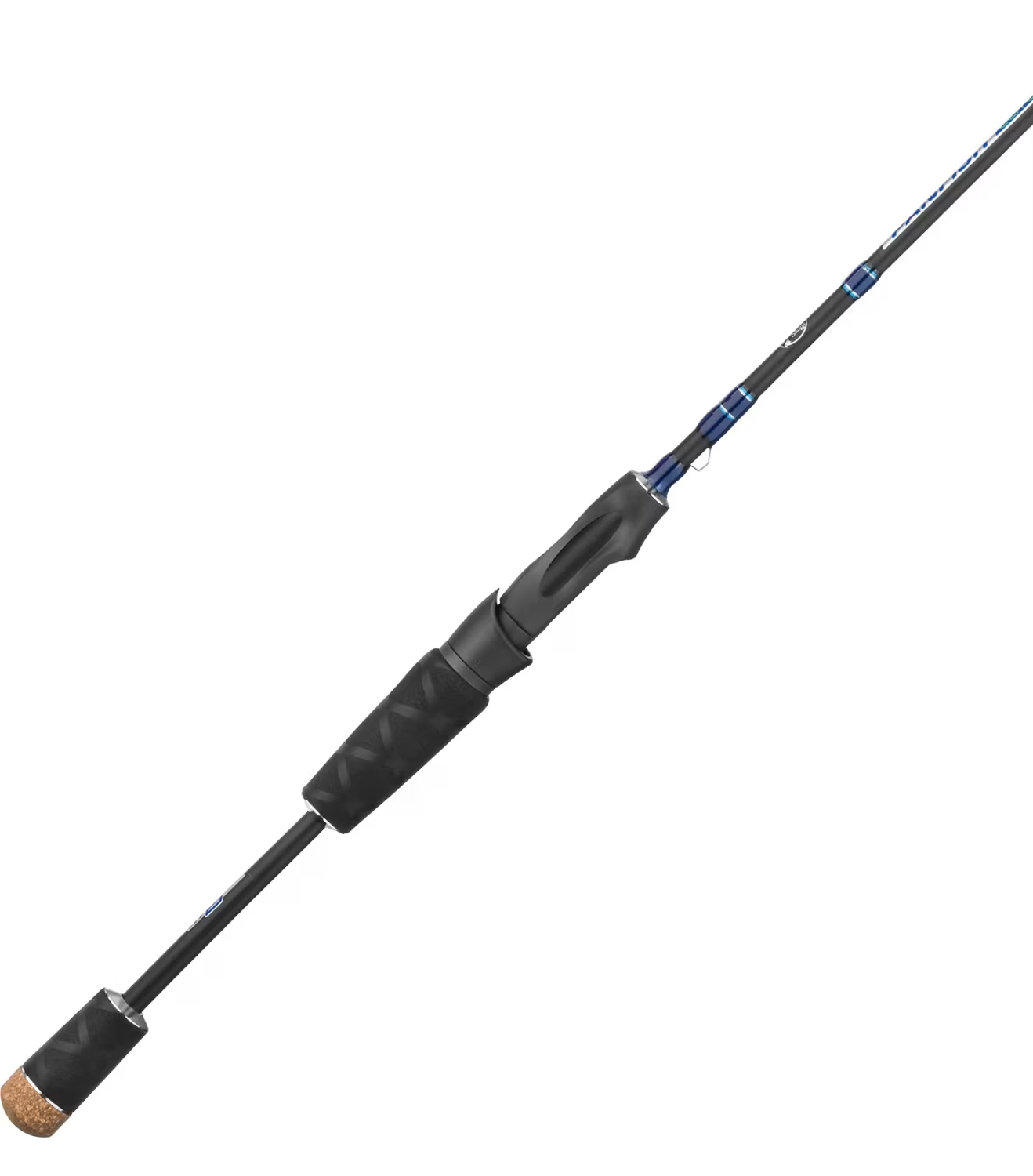
Value
Bass Pro Shops Panfish Elite
A light, responsive production rod that works especially well for open-water smallmouth and mixed-species fishing.
View Panfish Elite →
High End
A premium ultra-light rod with less weight, finer sensitivity, and a more controlled bend under load.
Recommendation Coming SoonOptional: The Heavy Casting Rod
Recommended Setup
The heavy casting rod is reserved for trips where vegetation or cover becomes a primary feature rather than an occasional obstacle. By midsummer, sparse spring growth can become broad lily-pad fields, thick surface grass, and dense edges where a hooked fish must be turned immediately before it buries deeper.
A 7-foot-6-inch heavy blank provides the leverage and lower-section strength needed to move fish and vegetation together. The extra-fast action brings that power into play quickly while retaining enough tip movement to cast accurately from a seated position.
A 150-size casting reel provides sufficient capacity for 50-pound braid without becoming unnecessarily bulky. The 8.3:1 ratio is intentionally fast, allowing the angler to recover line when a fish moves toward the kayak or breaks free of cover and creates sudden slack. As with the medium-heavy outfit, a left-hand retrieve allows a right-handed angler to keep the rod in the dominant hand throughout the cast and fight.
Fifty-pound braid gives this setup its purpose. It transfers pressure immediately, cuts through vegetation, and provides the strength needed to move fish and cover toward the boat. That level of line is unnecessary elsewhere in the system, which is exactly why the heavy rod remains optional.
On a heavy-cover trip, this rod replaces the medium spinning outfit. The medium-light preserves a lighter option for open water and edges, the medium-heavy handles general casting duties, and the heavy rod is reserved for the places that justified bringing it. When the planned water does not require 50-pound braid, it stays home.
Build the Heavy-Cover Outfit
Value
Bass Pro Shops Johnny Morris CarbonLite
A strong production casting outfit with the leverage and backbone needed for dense vegetation and substantial cover.
View CarbonLite →
High End
A premium heavy rod that reduces weight in hand while preserving the power needed to move fish through cover.
Recommendation Coming SoonA Core Collection With Room to Grow
Many anglers will eventually own more than five rods. Additional equipment provides backups, supports fishing away from the river, and allows highly specialized approaches when a situation warrants them. The five outfits described here are not intended to be the limit of a collection. They are a dependable core for shallow-river kayak fishing.
- Ultra-light spinning with 4-pound fluorocarbon
- Medium-light spinning with 6-pound fluorocarbon
- Medium spinning with 10-pound monofilament
- Medium-heavy casting with 15-pound fluorocarbon
- Heavy casting with 50-pound braid
Three form the standard loadout, while two extend the system toward light-tackle enjoyment or genuinely heavy cover. The progression is easy to understand on the water because each outfit has a distinct working range and a clear reason for being there.
Three rods remain a practical limit for a compact river kayak. Five prepared outfits at home make that limit flexible. The result is enough capability for the water ahead, less equipment exposed behind the seat, and considerably less chance that a branch or an errant cast decides which rods return home.