From a kayak, a mature grass bed can look almost absurdly simple. By midsummer on parts of the Fox River, submerged vegetation grows into a dense mass that reaches the surface. There is grass on one side, open water on the other, and a distinct line between them. A lily-pad field looks different but invites the same simplification. There are pads, there are holes, and somewhere underneath them there may be fish. Anglers usually describe both as cover, which is true as far as it goes, but it leaves out much of what makes aquatic vegetation important.
Plants change the water around them. They slow some of it and redirect some of it. They alter turbulence and mixing. Dense canopies can change how light penetrates the water and can create temperature and oxygen conditions that differ from nearby open water. Plant surfaces support small organisms, dense growth gives prey places to disappear, and openings beside or within that growth can give predators room to hunt. What appears from above to be one grass bed can therefore contain several different environments within a few yards.
Useful vegetation reading begins with the conditions the plants create. Density, depth, plant form, and current determine how much the surrounding water changes, and those changes are what make one bed different from another.
A Vegetation Bed Is Not One Habitat
Aquatic plants occupy space in moving water, and water has to respond to them. Research on vegetation hydrodynamics describes those effects across several scales, from individual blades to entire patches of vegetation. Sparse vegetation can behave hydraulically more like a rough bottom, while a dense canopy can produce a different flow regime with stronger velocity differences between the water moving through or below the plants and the water moving above them. At the larger scale, the arrangement of vegetation patches can matter as much as the geometry of the individual plants.
Translated from hydraulic engineering into something useful from a fishing kayak, a vegetation bed reorganizes flow simply by occupying part of the river. Water entering dense vegetation loses velocity to drag, with some moving through the plants, some over them, and some diverted around the patch. Flexible submerged plants can bend as current increases, changing their shape and the resistance they create. A thick bed that reaches the surface therefore behaves differently from a sparse collection of stalks with open water between them, even if both get casually described as grass.
Those hydraulic differences become especially important in shallow water. On the Fox, there often is not enough vertical water column to divide habitat into the clean depth zones anglers use on deeper reservoirs. A grass canopy occupying most of a four-foot water column can influence nearly all of the water available to a fish. Once the vegetation reaches the surface, the outside edge can become a sharp physical boundary between dense cover and relatively unobstructed water, putting two different environments directly beside one another.
Where Vegetation Meets Open Water
One of the Fox grass lines I fish regularly is formed by submerged vegetation that grows all the way to the surface. From the kayak it reads as a clean boundary: dense grass on one side, open water on the other. I stay on the open-water side and run a small popper as close to that edge as I can without burying it in the vegetation, usually making the longest parallel cast the shape of the bed will allow.
I have not found a dependable strike position along that retrieve. A fish may be tight to the grass or several feet off it, so I use the cast mainly as a quick test of the edge. A couple of casts will tell me whether anything is willing to respond; a strike is reason enough to keep working the area.
Prey and predators can use the same bed very differently. Dense plants provide refuge, complexity, and feeding opportunities for small fish and invertebrates. The open water beside the bed gives a predator more room to see, approach, and capture prey, putting refuge and hunting water side by side. None of that guarantees a bass will be there. Depth, current, prey, bottom composition, nearby structure, season, and other factors still determine whether the position is useful.
The familiar advice to “fish the edge” still leaves a great deal unresolved. A straight, featureless grass wall may create usable habitat for hundreds of yards, while a point, opening, isolated clump, or change in current can alter the character of one short section. Along a long vegetation line, I am looking for those local changes rather than treating every yard of the edge as equivalent.
My use of a popper there is partly practical and partly preference. I have caught fish along Fox grass edges on topwater at all times of day, and I have not seen enough of a time-of-day pattern to stop throwing it because conventional conditions say the topwater window should be closed. Much of the water is only a few feet deep, so a bass using that grass edge is already living relatively close to the surface. Sunlight and time of day may still influence a fish’s willingness to strike, but in my experience they have not been reliable enough to outweigh the simpler question of whether a fish is positioned near the path of the bait. The treble hooks also give me confidence once a fish commits, and there is the less scientific fact that a surface strike is simply one of the more enjoyable ways to catch a bass.
Dense Cover Can Favor the Prey
One of the easiest mistakes in bass fishing is to assume that habitat valuable to the fishery must also be preferred holding cover for an adult bass. The smallmouth research makes that assumption difficult to defend.
In an Ozark river study, researchers tracking adult smallmouth found that habitat type and depth strongly influenced fish location, but boulders were selected more often than the other available habitat types. Aquatic or overhanging vegetation by itself was not observed being used by the tracked bass, and vegetation combined with other habitat accounted for only a small portion of the observations. Another study in four Michigan reservoirs found something equally useful. Smallmouth responded positively to installed half-log structures under some conditions, but that response depended heavily on the surrounding habitat. At treatment sites, smallmouth catch-per-effort declined as vegetation cover increased. Nest density also generally declined as plant cover increased, and the benefits of the added structure were strongest where vegetation was relatively sparse.
Neither study means smallmouth avoid all aquatic vegetation. Different populations live in different systems, and vegetation type, plant density, life stage, prey, substrate, and season can all change the answer. They do show why “more grass means better smallmouth habitat” is too crude to be useful.
Vegetation may instead be important because of what it does to the prey community and to the spaces around itself. A 2025 study in Lake Nojiri, Japan, examined fish behavior in a system dominated by introduced smallmouth bass. Fish density increased with aquatic plant density, but overall foraging effort decreased as vegetation became denser. Young prey fish changed behavior when predators, primarily smallmouth, appeared, moving from more exposed water-column feeding toward the plant stalks. The authors concluded that patchy vegetation containing different densities in close proximity could be especially useful because prey could forage in more open water while retaining immediate access to refuge.
That creates a more interesting predator-prey relationship than the familiar statement that bass like grass. Dense vegetation can improve refuge for prey while simultaneously making those prey more difficult to capture. Open water can make hunting easier while exposing prey to greater risk. The transition between those two conditions can therefore matter to both sides for different reasons. Vegetation may matter to a smallmouth partly because of what it creates beside itself.
Grass and Lily Pads Create Different Water
Submerged grass changes water differently from a stand of emergent stems or a field of floating lily pads. In a submerged bed, the plants occupy part or nearly all of the water column, forcing current through, over, and around the canopy. As the growth becomes taller and denser, less water is exchanged freely between the interior of the bed and the open water outside it. Current, mixing, light, temperature, and oxygen can all be affected.
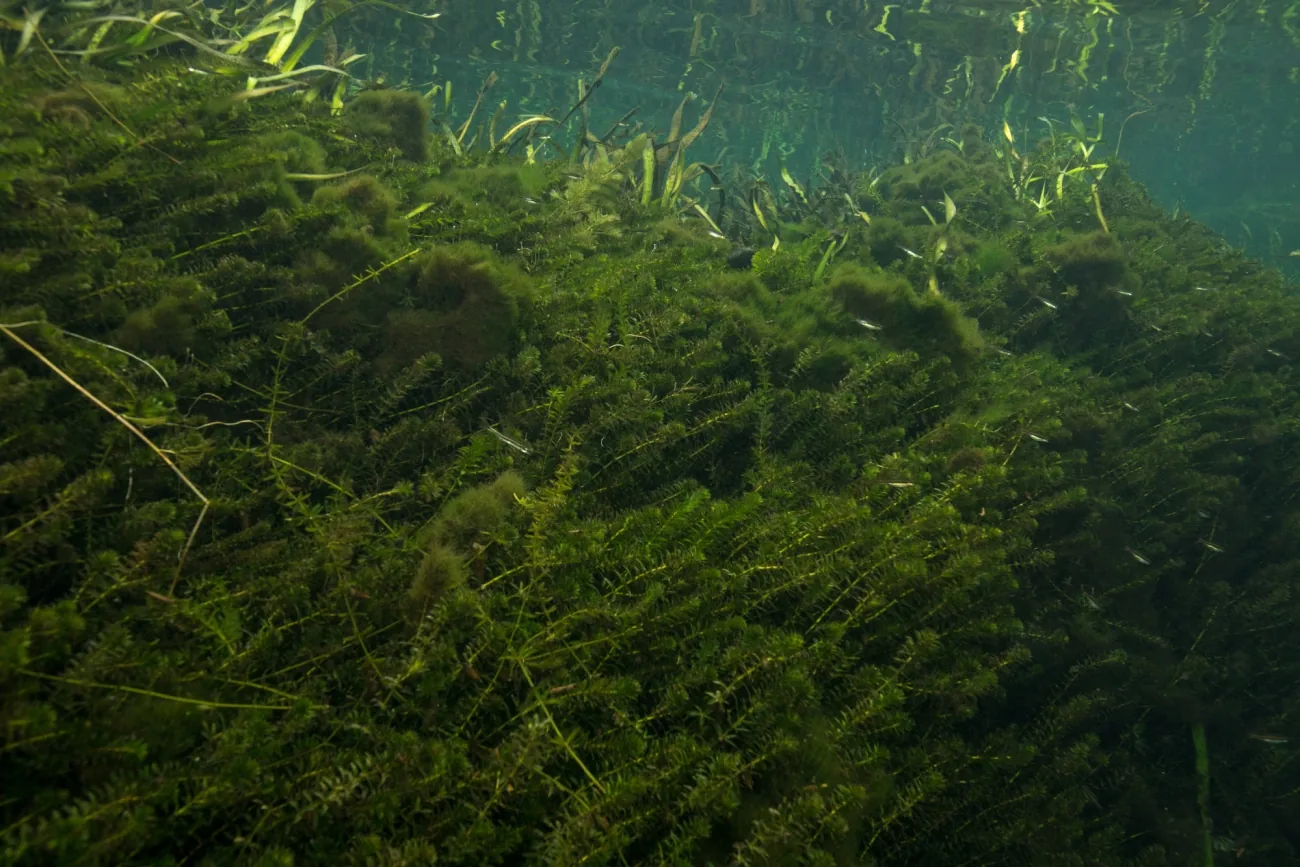
Research in a shallow lake dominated by dense submerged vegetation measured stronger thermal stratification in the center of the vegetation bed than along its edges. As the plants occupied more of the water column, nighttime dissolved oxygen near the bottom fell to essentially zero, while the vegetation also reduced horizontal exchange with surrounding open water. A Fox River grass bed will not necessarily behave the same way. The study involved a different waterbody, different plant conditions, and relatively limited flushing. Its value is in showing why familiar statements such as “grass adds oxygen” or “vegetation keeps the water cool” are inadequate. Plants photosynthesize, respire, block light, reduce mixing, and alter water movement. The resulting temperature and oxygen conditions depend on the bed and the circumstances.
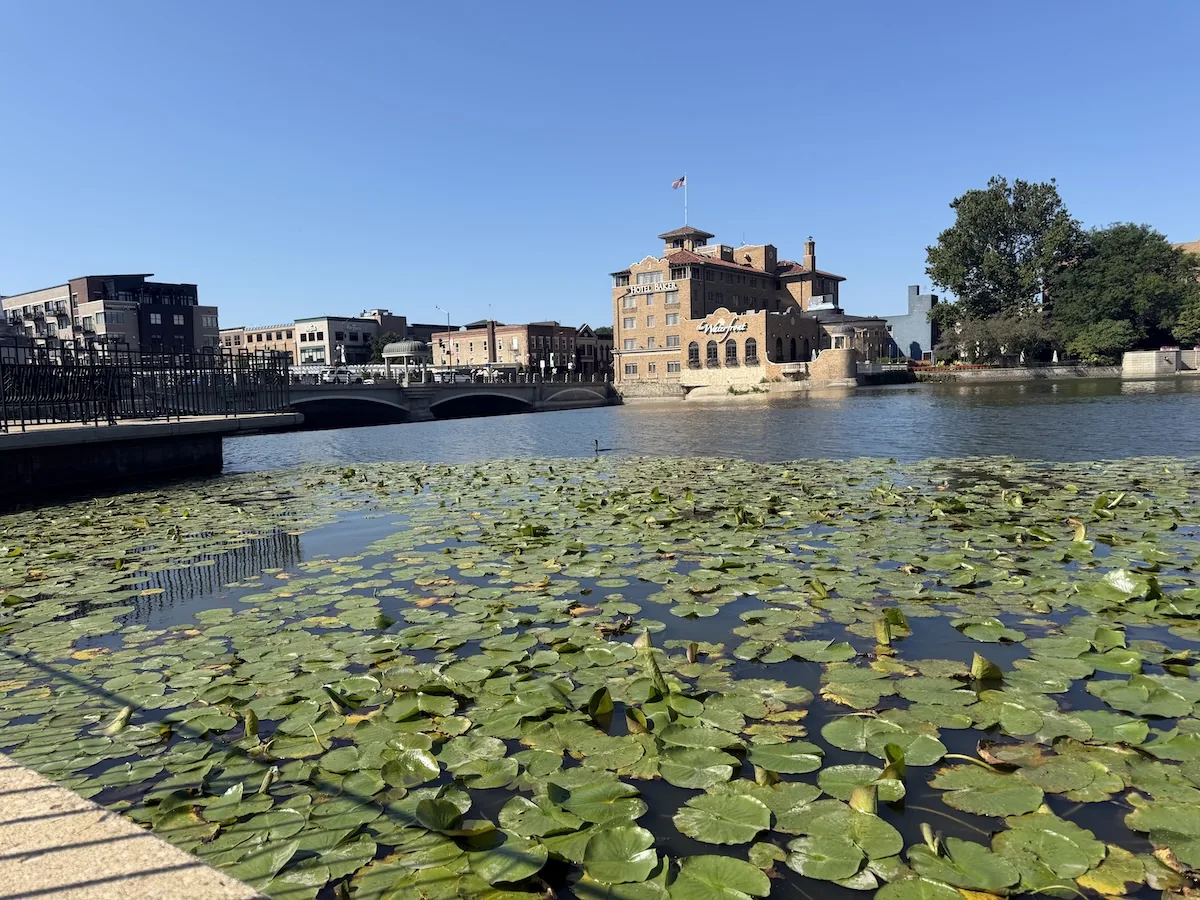
Lily pads create a different architecture. Instead of forming a continuous submerged canopy, floating leaves create an overhead layer connected to the bottom by stems, with water beneath and between them. From above, a large pad field can look nearly solid while containing internal lanes and openings. My fishing experience in those pad fields has been noticeably different from fishing the outside edge of submerged grass.
I usually work the accessible outside edge first with a popper or weedless swimbait. The swimbait has produced more fish for me around the pads, although it is also more troublesome to work through them. I rig it on a keel-weighted hook with the point skin-hooked into the plastic, which makes it reasonably weedless but hardly immune to stems, leaves, and the general aggravation of retrieving anything through mature vegetation. When the field becomes too cumbersome, I switch to a frog because it can be sent much farther into the cover. Large fields get long casts deep into them. Around isolated clumps, I prefer to cast across the vegetation and work the bait into and through the available openings.
The frog solves the access problem better than it solves the catching problem for me. My hookup percentage with frogs is poor, probably on the order of one landed fish for every ten legitimate opportunities. I regard that as a limitation in my execution rather than evidence against the bait. What is more interesting is where the successful strikes have occurred. With both frogs and swimbaits, my catches inside the pads have come from open holes.
My catches are too few to make open holes a universal rule. They are still a useful example of what this way of reading vegetation can reveal. The pads are the obvious feature from above, while the actual encounters between predator and lure have occurred where that canopy opens. Those openings are part of the pad habitat the plants create.
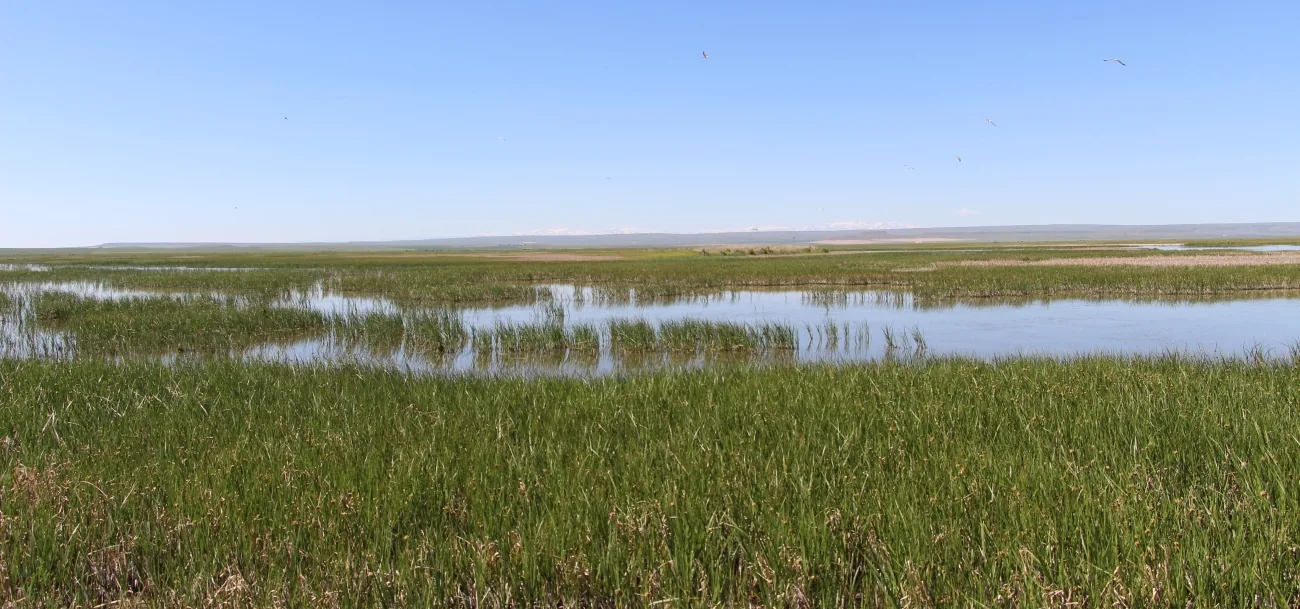
Emergent plants add another variation. Water willow, arrowheads, bulrushes, and other species put vertical stems directly into moving water while much of their foliage remains above the surface. Fox River restoration work has deliberately reintroduced water willow and other native emergent plants because established colonies can reduce erosion, trap organic material, and provide habitat for aquatic invertebrates and fish. I have much less fishing experience around those plants, so I would not pretend to know how individual Fox smallmouth use them. Their presence still reinforces the larger point: “vegetation” describes plant forms that interact with water in very different ways.
Read the Changes the Plants Create
Vegetation is easy to see, which makes it easy to stop thinking once it has been identified. There is the grass bed. There is the pad field. There are the emergent plants along shore. The more useful reading begins after that.
The things worth noticing are the changes within and around the vegetation. Where does the bed become dense, and where does it become sparse? Does submerged grass reach the surface or leave open water above the canopy? Does current strike the vegetation directly, run parallel to it, or barely touch it? Does the outside edge remain straight, or does it form a point, turn, pocket, or isolated clump? Does a broad pad field contain open holes or lanes? Does one patch sit immediately beside deeper or faster water? Is the vegetation healthy and standing, or beginning to collapse?
Some of those features can be seen directly from a kayak. Others cannot. I cannot look at a grass bed and reliably tell you the dissolved oxygen concentration beneath it, and I cannot see a subtle temperature gradient and assume it exists because the vegetation looks dense. The research tells us those differences can occur. It does not give an angler permission to invent them every time a fish is caught.
What we can do is recognize that vegetation changes the environment, then pay closer attention to the places where those changes are likely to differ from one another. That is why an outside grass line deserves attention, why an open hole within a lily-pad field may be different from the solid canopy around it, and why sparse and dense vegetation should not automatically be treated as the same habitat. It is also why more vegetation is not necessarily better for every fish using the system.
The plants are the visible part of the habitat. The more useful fishing water is often created by what happens around, within, and beside them.
Don’t read the plants. Read the changes the plants create.