
The useful question is not how much safety equipment can fit on a kayak. It is what is likely to go wrong, what will help when it does, and whether that equipment will still be available when it matters.
Kayak safety lists tend to expand until they include almost everything that could conceivably help on the water. A PFD and whistle become a knife, first-aid kit, spare paddle, throw rope, dry clothes, emergency blanket, navigation equipment, lights, repair supplies, and more. Most of those things have a legitimate use somewhere. They do not all belong on every kayak.
My fishing is usually done on familiar stretches of the Fox River in a motorized sit-on-top kayak, often in relatively shallow water and rarely far from a practical place to get off the river. I am not running whitewater, crossing large open water, or trying to extend the season deep into cold-weather paddling. The gear I carry reflects those limits.
What Stays on Me
My PFD goes on before I launch and stays on until I am finished working around the water. That includes the few minutes at the bank, when mud, rocks, uneven footing, and a heavy kayak probably make a fall more likely than anything dramatic farther out on the river. A bad fall can also mean striking your head before entering the water. I do not make a distinction between being on the kayak and being close enough to the river that a slip could put me in it.
Once I am fishing, the PFD is simply part of what I wear. I may spend several hours casting, turning in the seat, landing fish, and working around the boat without thinking much about it. If a PFD is uncomfortable enough that wearing it becomes a nuisance, I would replace the PFD.
That makes choosing a PFD around the kayak seat and paddling motion more useful than treating it as a generic boating vest.
My whistle is attached directly to the PFD. My phone is tethered to it and usually sits zipped inside a front pocket, while my identification and fishing license stay protected from water in another pocket. I use the phone constantly for photographs, so I do not put another waterproof enclosure around it. I accept the risk of a brief dunk and care more about making sure the phone stays attached to me.

The knife sits high on the left side of the PFD. I am right-handed, so I can reach across and pull it downward from the sheath while seated. It has a blunt tip and serrated cutting edge because its job is to cut line, cord, or webbing rather than serve as a general-purpose knife.
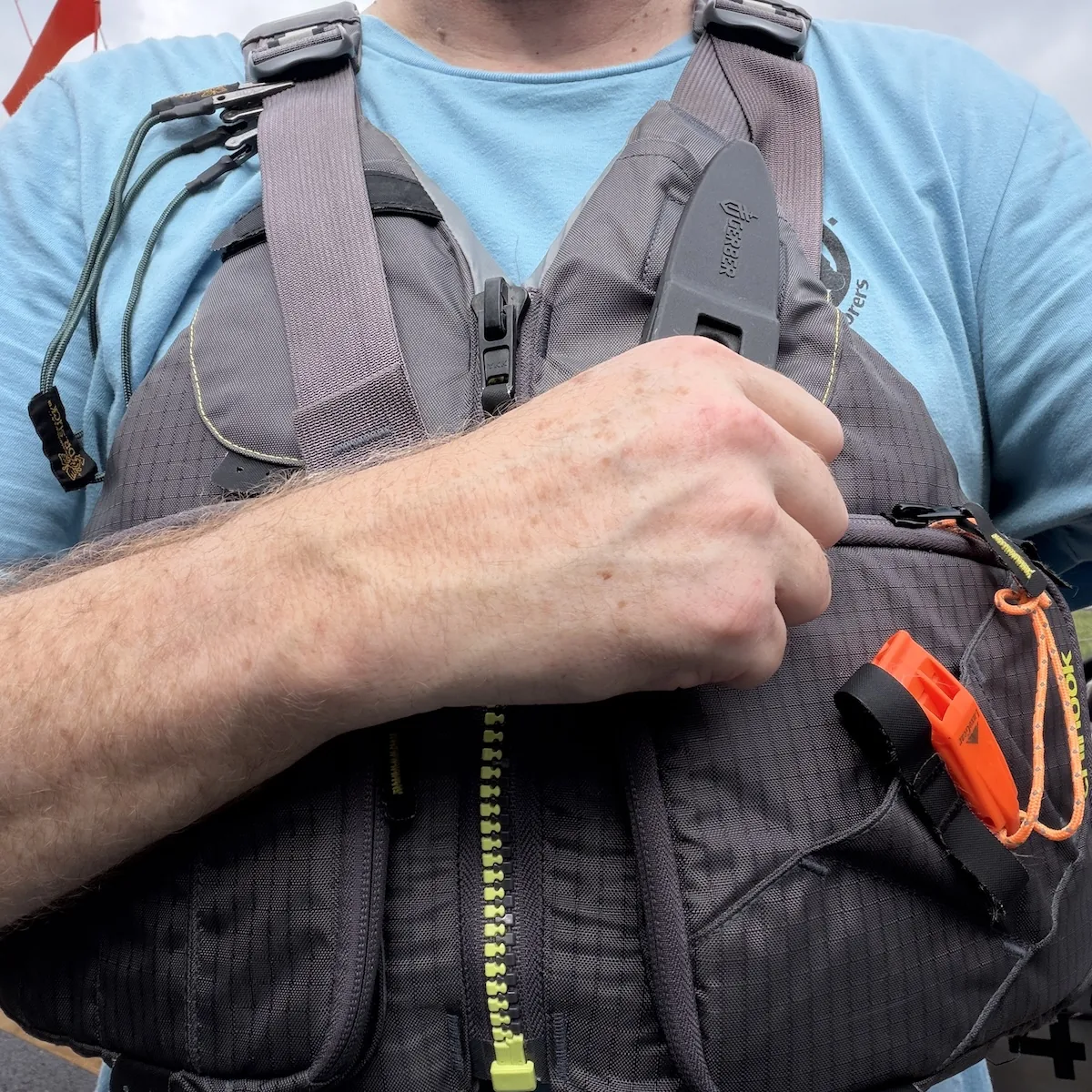
A fishing kayak gives that river knife a real job. Mine has an anchor and pulley system, fishing line, rods, wiring, and other rigging around the cockpit. There is simply more opportunity for something to end up wrapped around something else than there is on a bare recreational kayak.
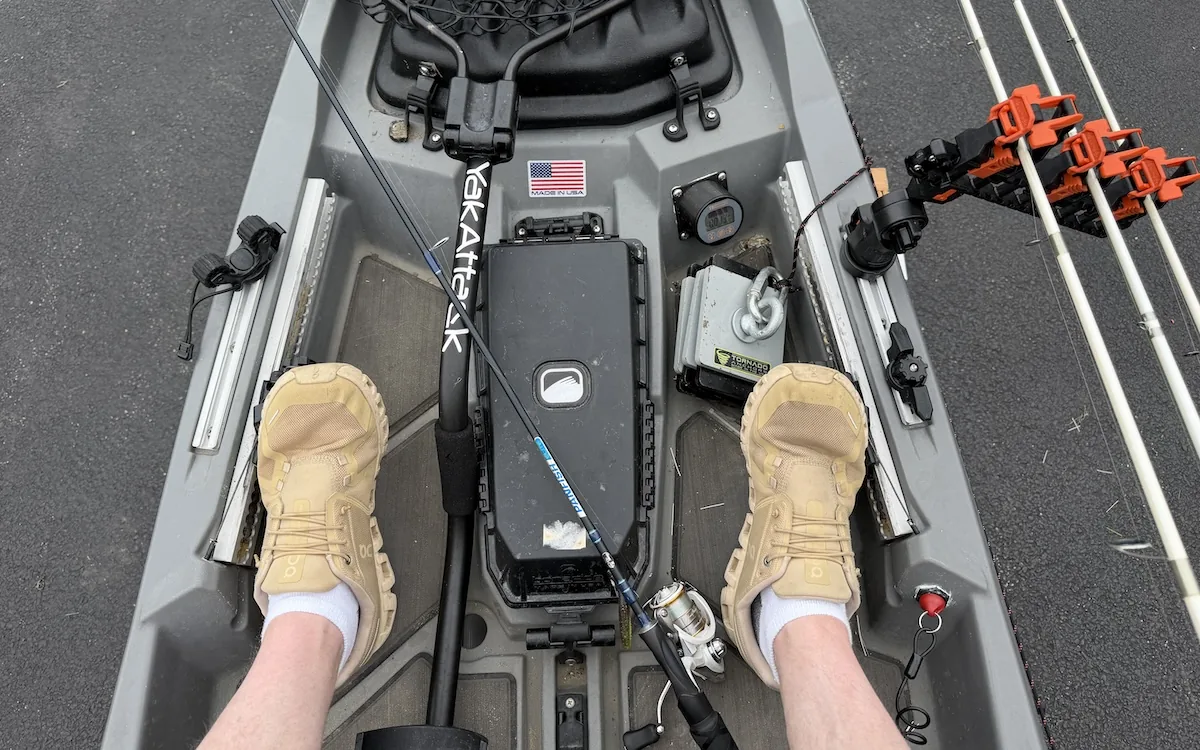
The truck key is the exception. It stays sealed in a waterproof bag inside the kayak hatch. I am much more likely to step into the river, slip at the bank, or get briefly wet while the boat remains beside me than I am to become completely separated from the kayak. Keeping the key dry inside the boat makes more sense for that situation.
What Stays on the Kayak
My fishing kayak normally moves under electric power, but I still carry a two-piece paddle every time. One half is quick-lashed along each side behind the seat. I can reach back, release them, assemble the paddle, and start moving without unloading anything. I have needed it more than once.
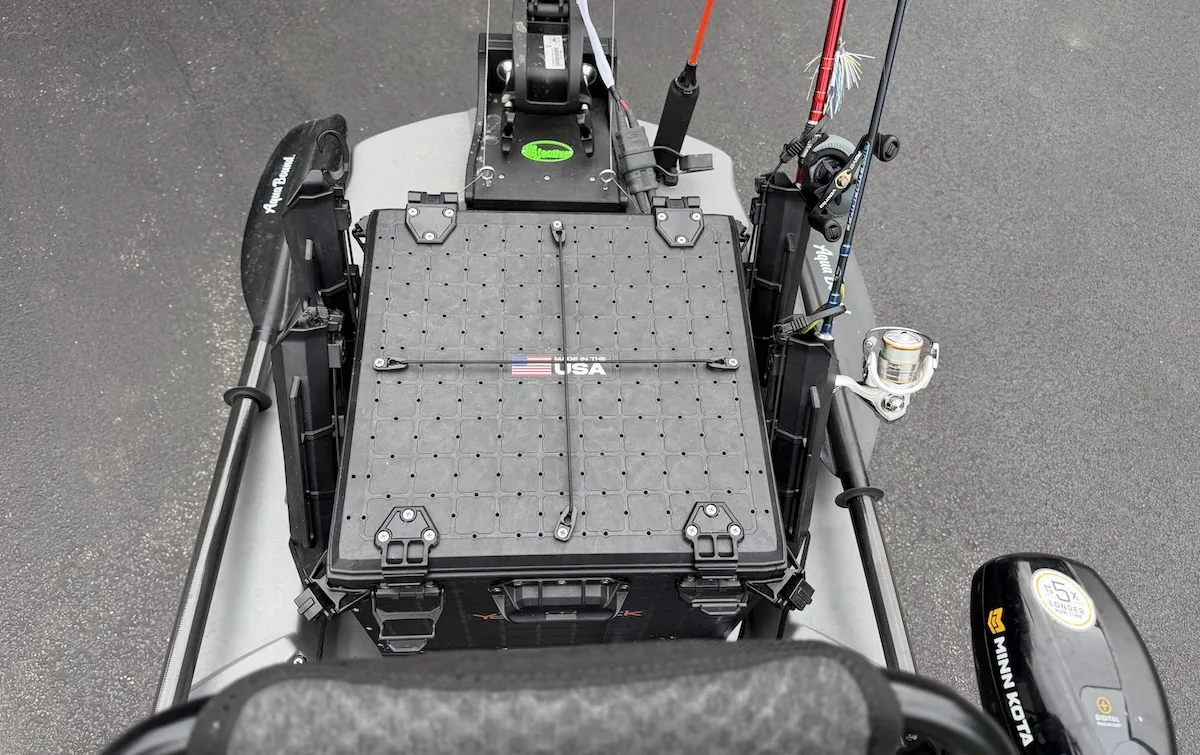
I do not carry another full paddle. On this boat, the paddle is already the backup for the motor, and a second one would take up a surprising amount of space to cover a fairly narrow chain of failures. Someone paddling solo in remote water could reasonably make a different choice.
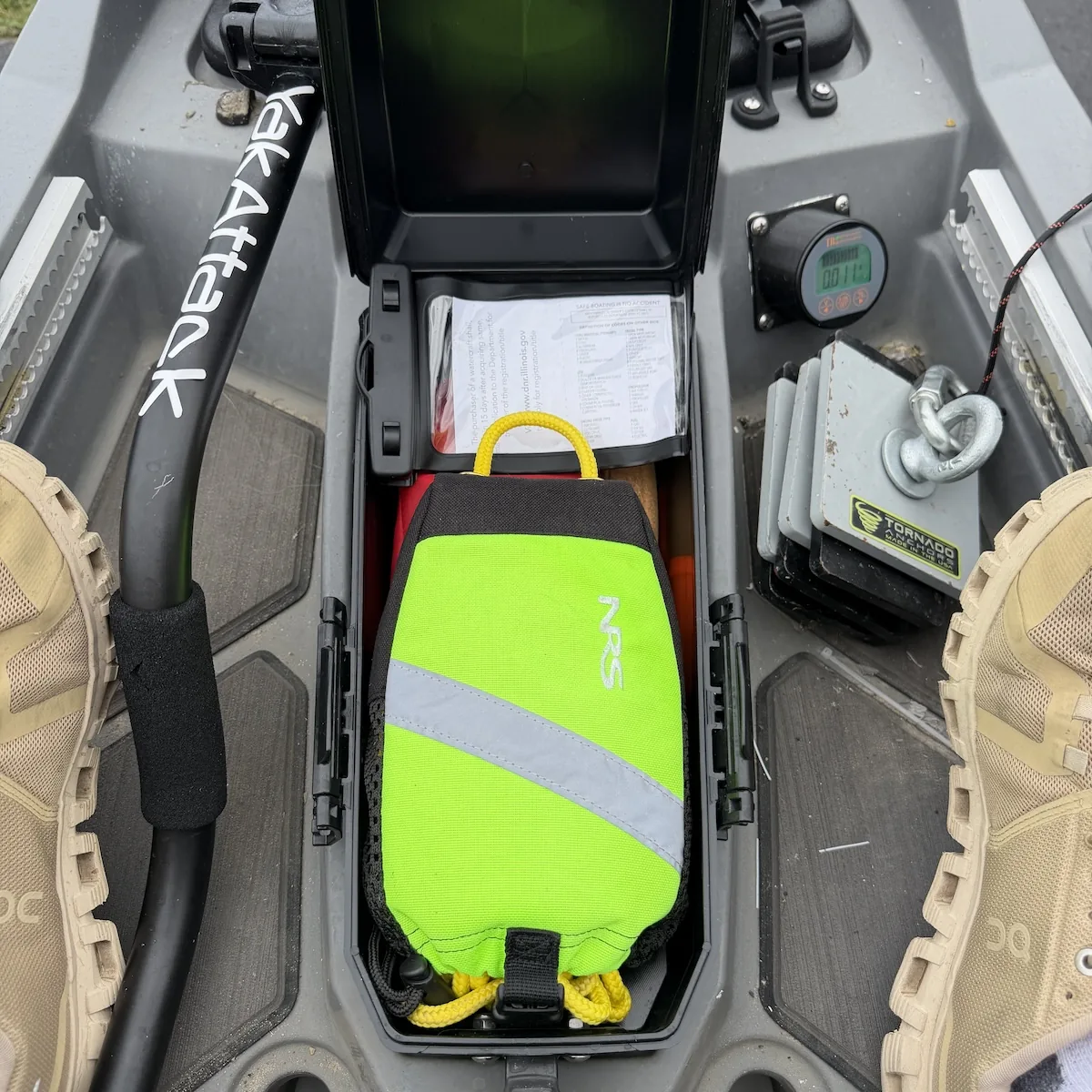
A small first-aid kit rides in a waterproof bag inside the hatch box directly in front of my seat. I keep it fairly ordinary. I do not carry a large trauma kit, and my repair equipment is similarly modest: pliers, electrical tape, and whatever small tools happen to be aboard for fishing. If the motor or electrical system fails badly enough that I cannot fix it quickly, I paddle back and end the trip.
The boat itself changes some of the equipment. My fishing kayak is a self-draining sit-on-top, so I do not carry a sponge or bilge pump. My non-fishing kayaks are sit-inside boats with sealed bow and stern bulkheads, and I carry a sponge in those because water entering the cockpit stays there until I remove it.
I also own a throw bag because I carry one in the non-fishing kayak for its traditional river-rescue purpose. Since I already have it, I usually put it in the fishing kayak too. It takes little room and may prove useful. If the fishing kayak were the only boat I owned, though, I doubt I would buy one specifically for the kind of fishing I normally do.
Navigation is handled by the phone. I do not carry a dedicated GPS, satellite communicator, emergency battery, or light on ordinary Fox River outings because the trips do not require them. If I were going somewhere unfamiliar, remote, or likely to keep me on the water near dusk, that would change.
What Stays in the Truck
During the cooler parts of spring and fall, dry clothing and an emergency blanket stay in the truck. If I go into the water badly enough that I need to change clothes, the fishing is over anyway. That setup assumes I am fishing close enough to shore and access that getting back to the vehicle is realistic. It would be a poor cold-water plan for a remote trip or a long crossing.
Where I Stop Kayaking
Cold water is where I draw the clearest line. If conditions are cold enough that I believe responsible kayaking requires a wetsuit or drysuit, I do not launch. If I think I need a helmet, neoprene hood, or similar specialized protection, I am probably looking at conditions I do not want to paddle recreationally.
That is not because I have anything against drysuits. I own one for scuba diving that cost several thousand dollars and use it regularly. In diving, cold water is often part of the activity, and the drysuit is simply appropriate equipment. I could extend my kayak season the same way. I just do not want to. Other paddlers do, and they equip themselves accordingly. My own kayak fishing stops earlier.
River conditions can make the same decision for me. Higher water changes current, access, strainers, shoreline options, and the behavior of places that are uneventful at lower flows. Low-head dams remain dangerous regardless of what is strapped to the boat. There are days when more equipment would add useful margin, and days when I would rather leave the kayak on the truck.
For the kind of river fishing I normally do, the safety kit is not especially complicated: PFD, whistle, phone, knife, paddle, first aid, and a few supporting items placed where I can actually reach them. The rest comes from choosing trips where that modest amount of equipment is still appropriate.
Planning an out-and-back river kayak trip is part of that decision, especially when current, distance, daylight, battery reserve, or downstream hazards can make the return harder than the launch suggested.